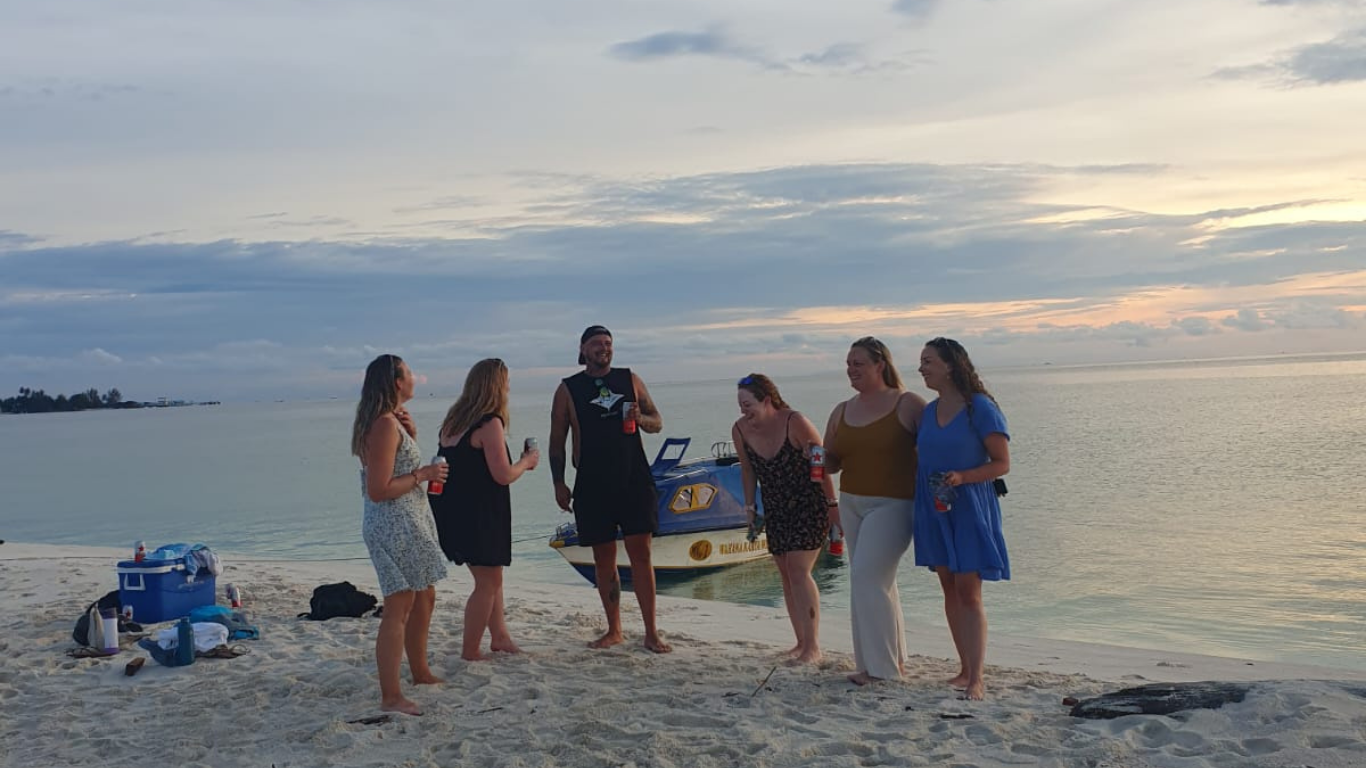
We provide daily dive trips and dive courses around the Sangalaki Marine Park.
Looking for tips and tricks about diving, marine life or what to do in Borneo? Follow us on our blog for weekly updates from the team!




MMF Researchers in Derawan Archipelago
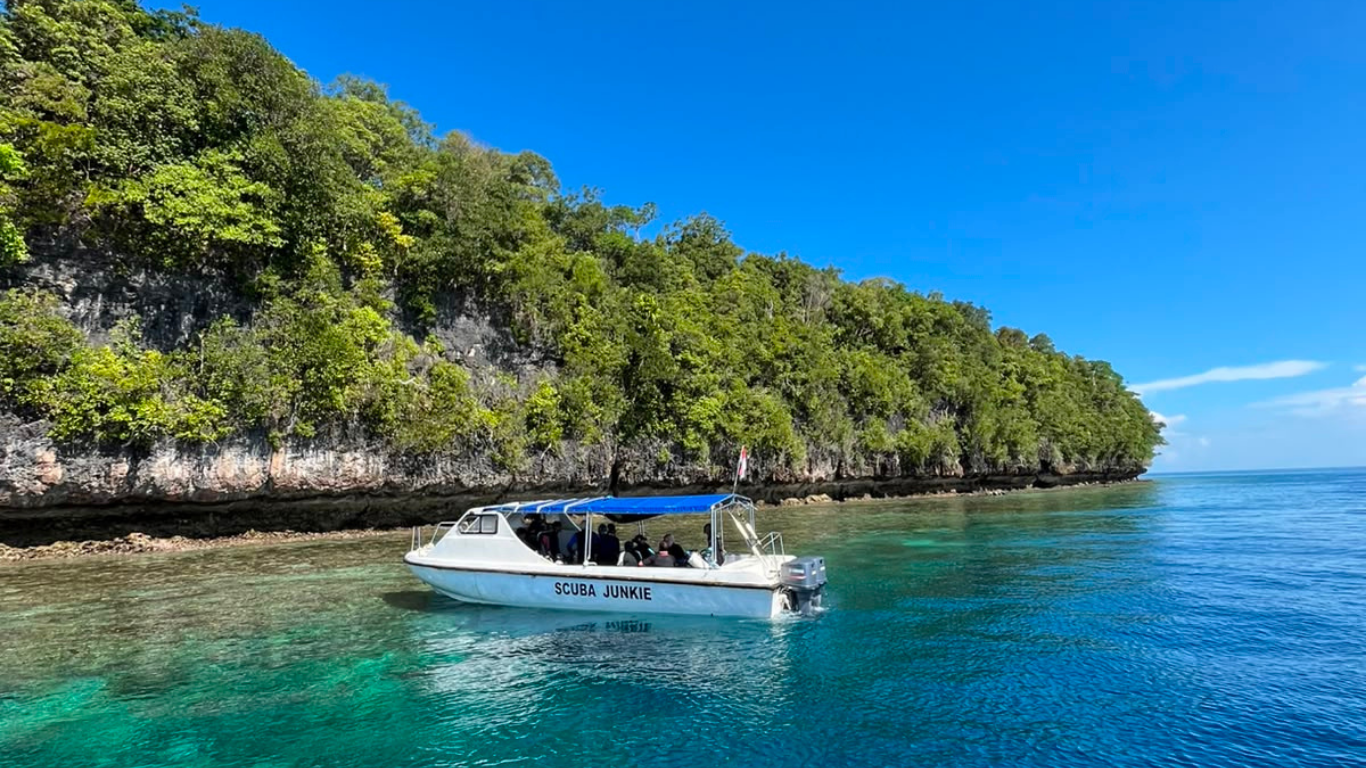
The sun is just rising over Derawan Island. The air is still, the sea calm, and the dive boats are lined up, ready for another day at sea. On the jetty, a small group of people moves with quiet efficiency — tanks clink, notebooks are tucked into waterproof bags, and cameras are checked one last time.
They’re not preparing for an ordinary dive.
They’re preparing for research.
This is what a typical day looks like for the Marine Megafauna Foundation (MMF) researchers in Derawan Archipelago, where every dive, every photo, every note logged underwater adds a new piece to the puzzle of how to protect our ocean’s most iconic species.
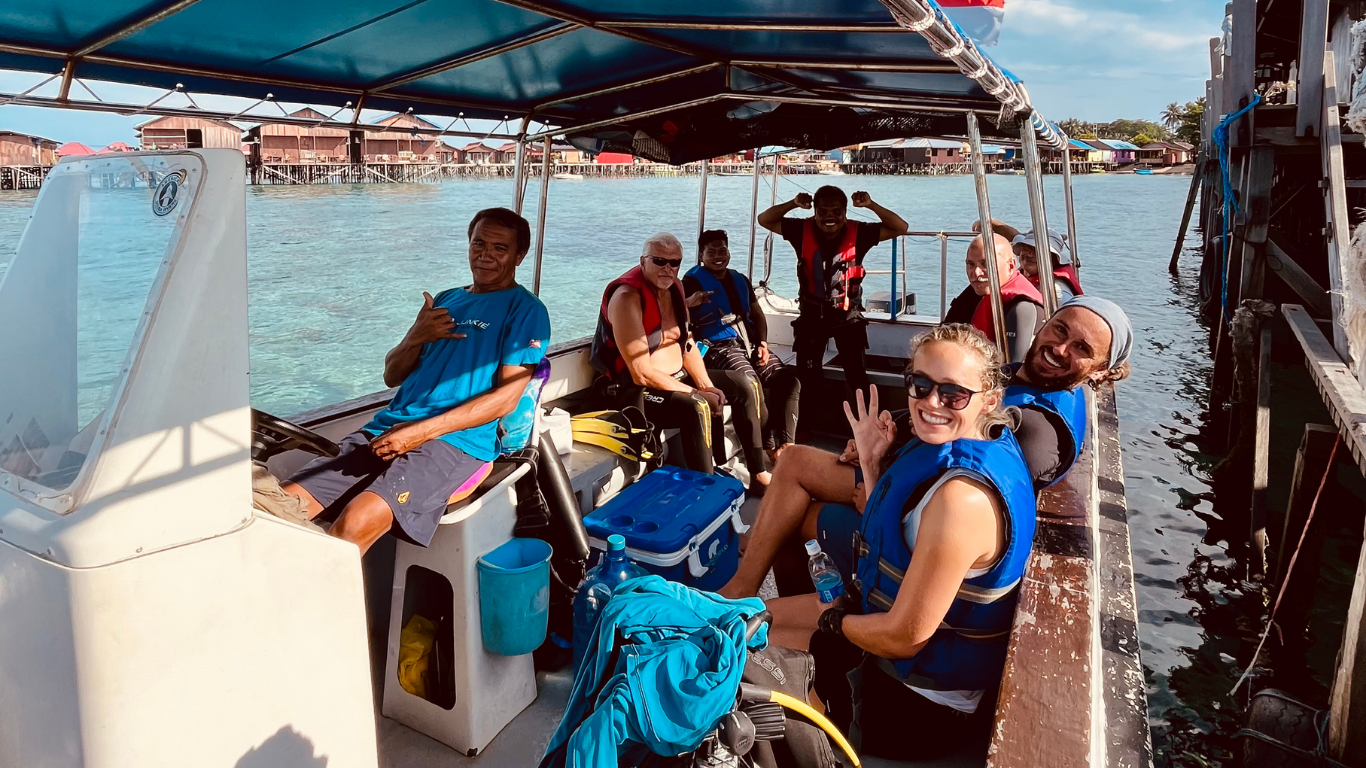
The day begins early at the dive center, often side-by-side with the Scuba Junkie Sangalaki team. Researchers help load gear and tanks onto the boats, sharing stories and laughter before the morning briefing.
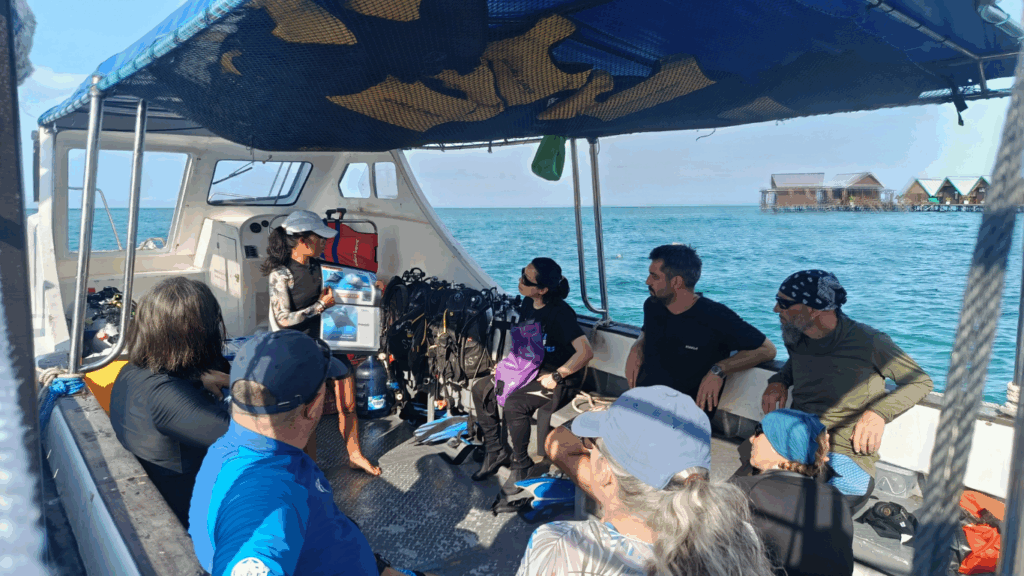
Before heading out, they gather the divers for a pre-dive talk — not just about safety and currents, but about the species they might encounter: reef manta rays, sea turtles, and leopard sharks.
They explain the goals of their research and teach guests how to interact responsibly with marine megafauna — by keeping a respectful distance, avoiding sudden movements, and never chasing or touching animals.
“Every diver can help,” one researcher says. “It’s not about getting the closest photo — it’s about making every encounter count.”
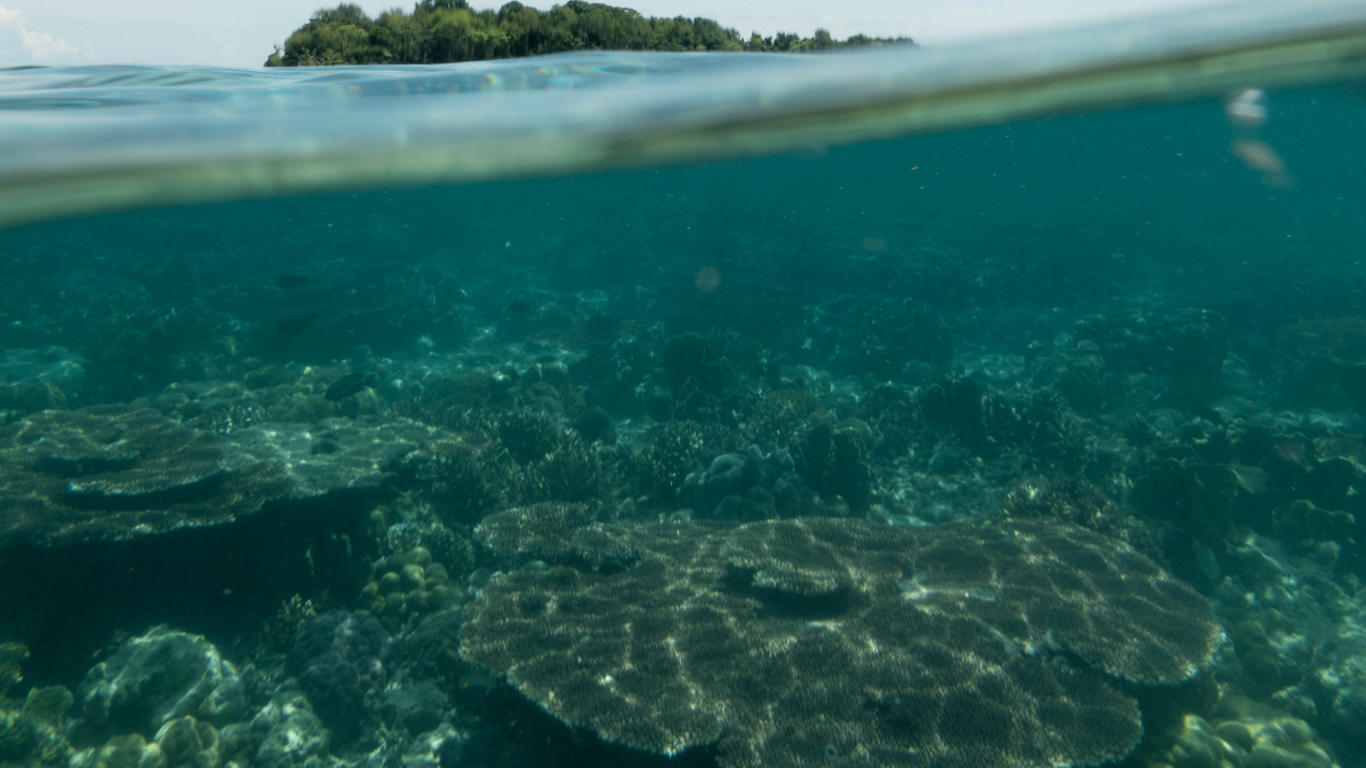
Once underwater, the work begins. Researchers record environmental data like water temperature, visibility, and current strength, and take note of human impacts such as anchors, coral damage, or plastic debris.
They also perform photo identification — a method where each animal’s unique pattern (a manta’s belly spots or a turtle’s head scales) is photographed and catalogued. These images help track individuals over time, revealing migration patterns, reproductive cycles, and even survival rates.
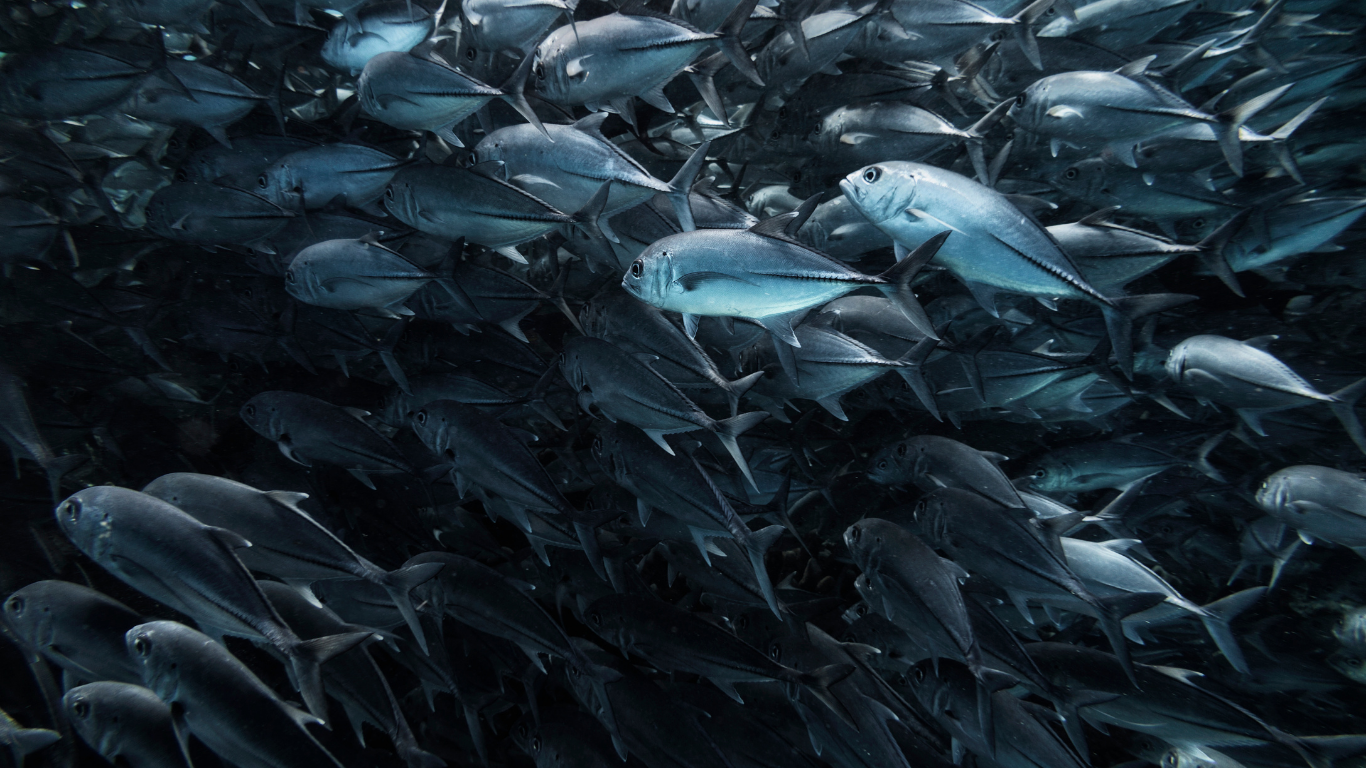
Some days bring excitement — a manta gliding inches away, a turtle soaring past the reef, or a rare shark silhouette in the blue. Other days, megafauna sightings are scarce. But for scientists, every dive is valuable.
“Even when we don’t see large animals, the data tells us something,” explains Rahvania, one of MMF Researchers in Derawan Archipelago. “By documenting reef health, plankton levels, and human activity, we learn what attracts or drives away species. It all helps us understand how to protect them.”
Not all research happens in the water.
On dry days, the team processes data from previous dives — reviewing photos, updating ID databases, and uploading information into MMF’s global network. These long-term records are crucial for understanding population trends and identifying critical habitats for conservation.
Dry days also mean planning future projects and community outreach. MMF Researchers in Derawan Archipelago works closely with dive centers, local authorities, and schools to raise awareness about sustainable tourism and the importance of protecting marine megafauna.
At Scuba Junkie Sangalaki, this collaboration feels natural. Our guests learn directly from MMF researchers in Derawan Archipelago onboard — even helping photograph mantas and uploading images to MantaMatcher.org, the world’s first global manta ray ID database.
Every dive becomes a shared mission between science, tourism, and conservation.
Just when scientists thought they knew the mantas, the ocean revealed another secret.
In 2020, the Marine Megafauna Foundation and international collaborators officially described a new manta ray species — Mobula yarae — discovered in the Atlantic Ocean off West Africa.
(Read the full MMF article)
This breakthrough reminded researchers how much we still have to learn about these gentle giants. And here in Sangalaki, every new photo, every recorded pregnancy, and every environmental data point brings us closer to understanding the mantas that call East Borneo home.
Marine ecosystems are vast, fragile, and changing fast. Without science-based monitoring, many species could vanish before we even understand their role.
Organizations like MMF are the bridge between exploration and preservation — turning dive sightings into data, and data into protection.
MMF researchers in Derawan Archipelago has already revealed that Sangalaki is a key reproductive site for reef mantas, with 24% of identified females observed pregnant. It’s also a multifunctional habitat, supporting feeding, cleaning, and breeding activities that are essential to the species’ survival.
Science like this doesn’t just protect mantas. It protects everything connected to them — the reefs, the turtles, the sharks, and the people who depend on healthy oceans.
At Scuba Junkie Sangalaki, we’re more than a dive resort — we’re part of a global community of ocean advocates.
Through our partnership with MMF, we provide boats, logistical support, and a platform for researchers to collect data and engage with divers. Guests often dive alongside the scientists, learning how their own encounters contribute to marine protection.
Our conservation commitment runs deep, extending across all Scuba Junkie locations, including our NGO Scuba Junkie SEAS in Sipadan. There, we work with local communities to reduce marine debris, protect nesting turtles, and conduct reef monitoring programs.
Different islands, same mission: to protect the ocean we love.
As the boats return at the end of the day, the sun paints the sea in gold. Researchers rinse their gear, log their notes, and back up the day’s data. Another small piece of the ocean’s story recorded. Another step toward understanding how to protect it.
Science may sound methodical, but here, it feels deeply personal.
It’s about connection — between people and planet, divers and scientists, mantas and those who fight for them.
Every photo, every data point, every shared dive matters. Because understanding the ocean is the first step to saving it.
Would you like to spend a day diving with researchers?
Tell us in the comments what marine species you’d love to learn more about.