




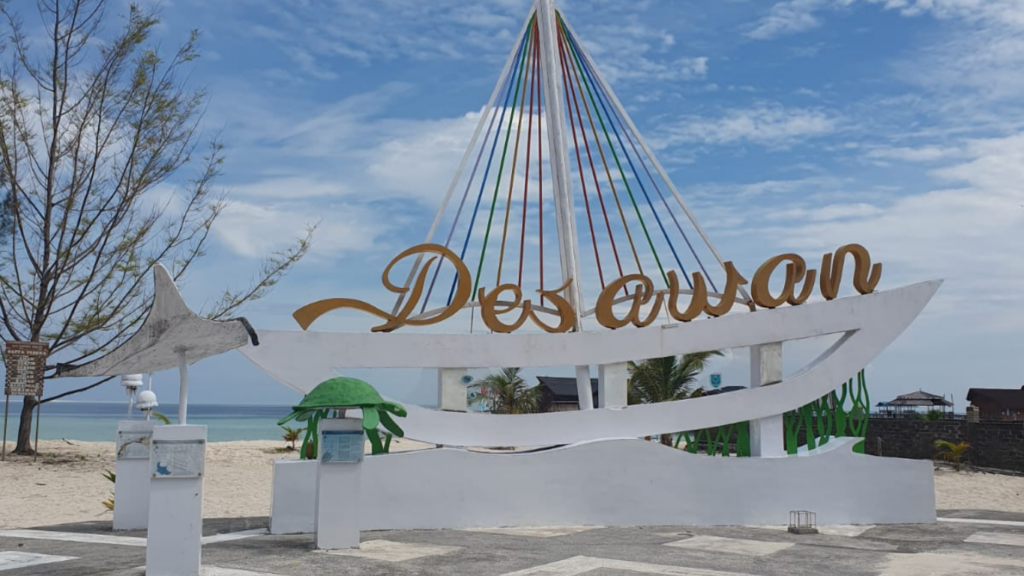
Learning a few Indonesian words in Derawan can completely change the way you experience the island.
You do not need to speak fluently. You do not need perfect pronunciation. But knowing a handful of simple expressions shows respect, builds connection, and often leads to warmer smiles and easier conversations.
The Derawan Archipelago, located in East Kalimantan, Indonesia, has its own rhythm and personality. While Bahasa Indonesia is the national language, daily life here is influenced by local traditions, coastal culture, and the relaxed pace of island living.
Let’s explore the most useful Indonesian words in Derawan, how to use them naturally, and what they reveal about local culture.
The Derawan Archipelago is part of Berau Regency in East Kalimantan. People here speak Bahasa Indonesia as the main language, but many also speak local dialects influenced by Berau Malay, Bugis, and other coastal communities.
As a visitor, you only need basic Bahasa Indonesia. Locals appreciate any effort, even if it is just one word.
Pronunciation is usually straightforward. Words are spoken clearly and almost exactly as they are written.
Here are simple and useful words you can start using immediately.
Good morning
Used in the morning until around 11 am. Saying selamat pagi when you walk into the dive centre or greet the boat crew is a great way to start the day.
Good afternoon
Used roughly from late morning until mid afternoon.
Good late afternoon
Perfect to use when returning from dives in the late afternoon.
Good evening
Used after sunset.
These greetings are easy to remember and show immediate respect.
Politeness is highly valued in Indonesian culture. These words matter.
Thank you
Probably the most important phrase you can learn. Say it when someone serves you food, helps with your gear, or brings coffee.
You are welcome
This is what you will often hear in response to terima kasih.
Please
Used when asking for something politely.
Excuse me
Used when passing in front of someone or trying to get attention respectfully.
Using these Indonesian words in Derawan makes interactions smoother and more meaningful.
If you are diving in the Derawan Archipelago, you will quickly pick up a few additional terms.
Water
Important in a tropical climate.
To eat
You might hear “sudah makan?” which means “have you eaten?” This is a common friendly question, not an interrogation.
Slowly
You may hear this on boats or during entries. It reflects the relaxed and careful island approach.
Be careful
Often said when stepping on wet surfaces or boarding boats.
In Derawan, communication is not only verbal. Body language and tone matter just as much.
Island culture in the Derawan Archipelago tends to be:
Calm
Soft spoken
Community oriented
Patient
Confrontation is generally avoided. Raising your voice is uncommon. Smiling, even during small misunderstandings, is part of keeping harmony.
This can feel different from larger Indonesian destinations like Bali or Jakarta, where tourism is more fast paced and commercial. Derawan feels quieter and more local.
Understanding this context helps you interpret conversations correctly. A gentle response usually works better than urgency.
Derawan is a predominantly Muslim island. You may hear the call to prayer from the mosque, and during Ramadan the daily rhythm changes slightly.
Simple respectful phrases such as:
Selamat berbuka
Happy breaking of the fast
can be appreciated during Ramadan, though not required.
Even without perfect language, respectful behaviour and curiosity go far.
You do not need long sentences. In fact, shorter is better.
For example:
Selamat pagi, terima kasih
Good morning, thank you
Permisi, tolong
Excuse me, please
Terima kasih banyak
Thank you very much
Adding “banyak” means “a lot” and makes the thank you stronger.
The effort is what matters most.
Because the Derawan Archipelago is smaller and less urbanised than many other Indonesian destinations, communication feels more personal.
People recognise faces quickly. Shop owners remember you. Boat captains greet you by name.
Using Indonesian words in Derawan reinforces that sense of connection. You are not just a tourist passing through. You are participating in island life, even briefly.
That difference is subtle but powerful.
Learning Indonesian words in Derawan is not about fluency. It is about connection.
A simple selamat pagi can change the tone of your day. A sincere terima kasih can build goodwill that lasts beyond your stay.
Travel is not only about the reefs, the wildlife, or the views. It is also about the people who call the island home.
And sometimes, the smallest words leave the biggest impression.
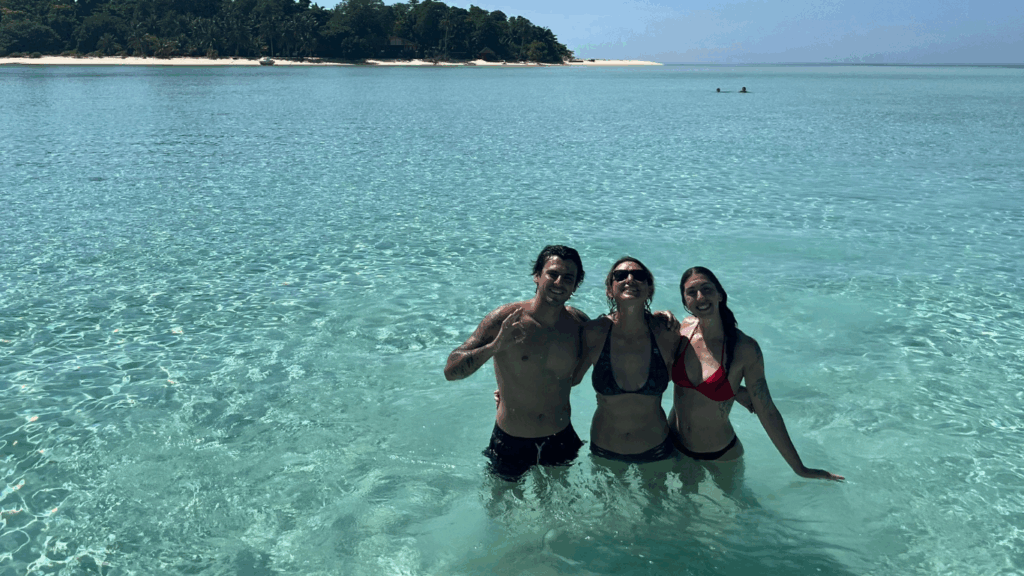
Maybe you’ve been dreaming about visiting this part of the world—those turquoise waters somewhere off Borneo—but haven’t quite made it yet. So, let us take you there.
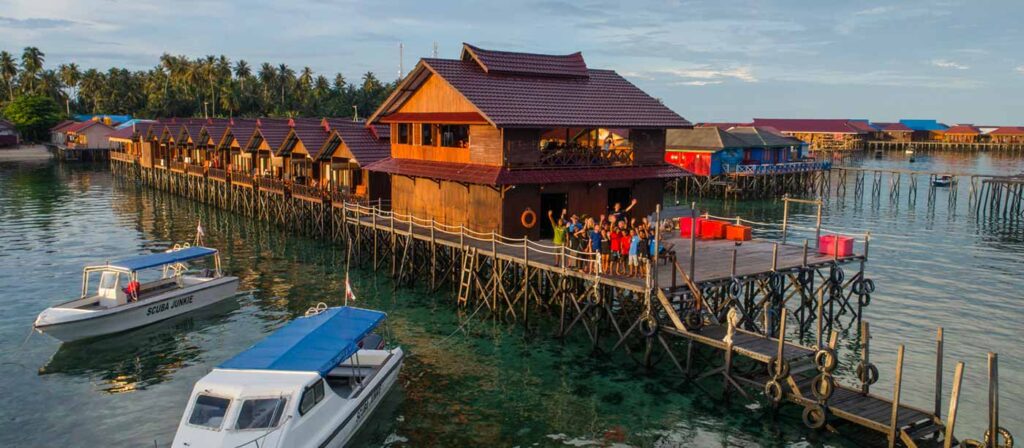
Close your eyes for a moment. Imagine the sound of gentle waves lapping against a wooden jetty, the smell of coffee in the morning air, and the quiet excitement of another day about to unfold underwater. This is what a day at Scuba Junkie Sangalaki feels like—where adventure and peace flow together in perfect rhythm.
A day at Scuba Junkie Sangalaki starts with a slowly wake up. Sunlight filters through the trees, and the air already carries that warm, salty breeze that feels like a hug from the tropics. From your bungalow, you can hear the gentle hum of the ocean just meters away.
Some early birds stroll down the jetty for sunrise photos, while others stretch lazily before breakfast. There’s no rush here—just the sound of waves, the occasional call of a kingfisher, and the quiet promise of another beautiful day ahead.
Breakfast at the resort is a laid-back affair—eggs, fruit, toast, and fresh coffee served with a side of ocean view. As you sip your coffee, the dive team is already busy prepping the gear, loading tanks, and chatting with guests about the day’s plan.
Each morning, we brief divers on where we’re heading:
At 8:00, it’s time to go. Tanks clink, fins shuffle, and laughter echoes down the jetty as the boats push off.
The ride itself is part of the joy—wind in your face, sunlight glittering on turquoise waves, sometimes dolphins racing beside the bow. For Derawan trips, we leave a bit later around 9:00 AM, since the dive sites are right on our doorstep.
The first dive always sets the tone. You roll back into crystal-clear water, and suddenly the world transforms—giant sponges, swirling schools of fish, maybe a passing turtle or even a manta ray.
Each site around the archipelago has its own personality, from gentle slopes to dramatic walls, but one thing never changes: the feeling of awe as you descend into warm blue silence.
Back on the boat, the team hands out tea, coffee, and biscuits, and everyone compares notes about the dive. Someone saw a frogfish, someone else spotted a shark.
If you’re diving near Kakaban, this is the time when we take guests to visit the Jellyfish Lake—a once-in-a-lifetime experience of snorkeling among harmless golden jellies.
At Sangalaki, we sometimes visit the Turtle Hatchery, where baby turtles begin their incredible journey to the ocean. It’s a quiet reminder of how much life thrives here, both above and below the surface.
The second dive usually follows soon after—another chance to spot mantas gliding overhead or explore coral gardens glowing in sunlight.
Afterward, we stop for lunch on a jetty or a beach, depending on tides and weather. Plates of rice, noodles, and tropical fruit taste even better with your feet in the sand and the ocean stretching endlessly in front of you.
One last dive before heading back. By now, the sea feels like home. You’ve relaxed into the rhythm—gear up, giant stride, bubbles, and silence. Sometimes the ride back is peaceful and sleepy; other times, we’re joined by pods of dolphins that leap and play alongside the boat, escorting us home.
Once back at the resort, the day slows again. Divers gather in the lounge to log their dives, trade photos, and share stories. Someone cracks open a beer. Someone else naps in a hammock.
If the weather is good, we might take new guests to the sandbank to spot baby guitar sharks in the shallows—a magical sight that never gets old.
Dinner is a casual affair at one of the local restaurants nearby—grilled fish, rice, sambal, and lots of laughter. And for those nights when the energy’s still high, we head to Syagi Restaurant for karaoke—because nothing bonds divers like off-key singing after a long day underwater.
A day at Scuba Junkie Sangalaki ends like it began: with the sound of the waves, the glow of the setting sun, and the kind of tired happiness only a full day of diving can bring.
At Scuba Junkie Sangalaki, every day feels like a story—filled with adventure, nature, friendship, and connection. The surface life is slow and simple, but once you dip beneath, it’s pure wonder.
Whether you’re planning your next dive trip or still dreaming about it, know this: paradise isn’t as far as it seems. It’s waiting—sunrise to sunset—right here in the heart of the Derawan Archipelago.
Have you ever lived a perfect dive day like this?
Tell us what your dream day underwater looks like in the comments below!
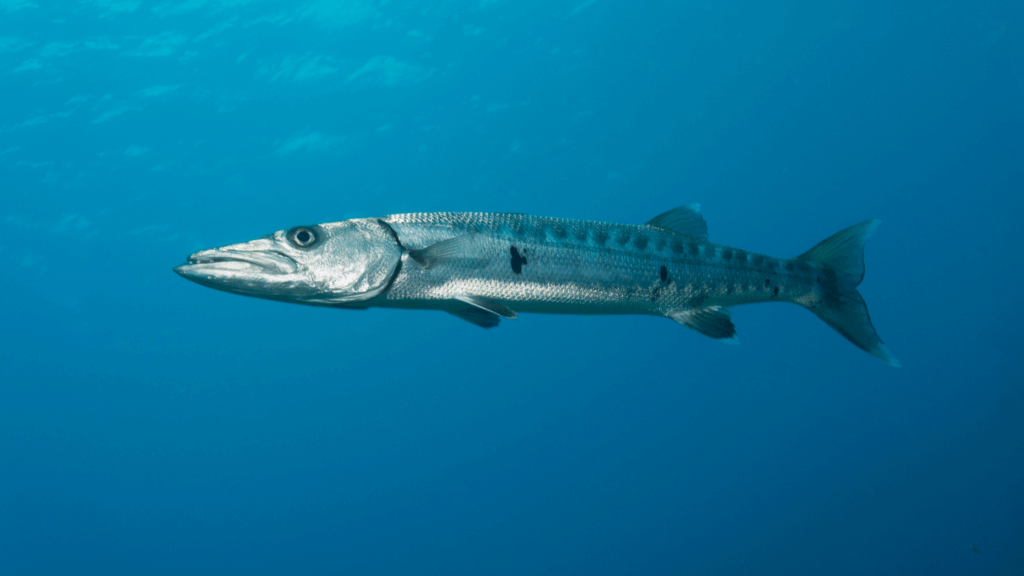
If Part 1 left you dreaming of currents and coral walls, get ready for more. The top dive sites in the Derawan archipelago offers don’t end there—this region is bursting with world-class diving across Kakaban, Sangalaki, Maratua, and Derawan. From drift dives teeming with pelagics to quiet encounters with pygmy seahorses, the underwater diversity here is unmatched.
A peaceful drift with big blue surprises
A dive at Meditation Wall starts serene—floating effortlessly along a beautiful coral wall. The name suits it: this site invites you to slow down, observe, and appreciate. Look closely at the sea fans and you might find the elusive Denise’s pygmy seahorse. Keep your eyes open for leaf scorpionfish and frogfish camouflaged along the ledges.
But don’t get too zen—this wall dive has surprised us with thresher sharks, eagle rays, and even a solo hammerhead in the blue. That’s what makes it one of the top dive sites in the Derawan archipelago wide.
📌 Good for intermediate divers and macro lovers. A must for calm drift dives.
Fly with giants in the fast lane
Manta Run lives up to the hype. This sandy-bottomed channel, flanked by coral ridges, becomes a true “manta highway” when the current picks up. Glide effortlessly and keep your head on a swivel—reef mantas frequently pass through, circling for food or cleaning.
Besides the main stars, leopard sharks rest on the sand and garden eels peek from their holes. The thrill of the current and the magic of mantas makes this one of the top dive sites in the Derawan archipelago has for unforgettable pelagic action.
🌐 See more about Manta diving in Sangalaki
Walls, rays, and schooling fish galore
Though its name might be quirky, Gorgonzola delivers serious underwater beauty. This site offers a quieter alternative with dramatic vertical walls, vibrant soft corals, and excellent visibility.
Divers here often encounter bumphead parrotfish, napoleon wrasse, and big schools of jackfish and batfish. Sharks aren’t uncommon either—white-tip reef sharks and eagle rays pass by in the blue.
📸 Ideal for wide-angle photography and current-lovers.
An expansive reef with hidden gems
North Sangalou surprises many with its vast, undulating reefscape. You’ll descend into the blue and watch as a rolling coral landscape reveals itself, dropping to 40 meters (with a max dive depth of 30m).
This is a mixed dive—white-tip reef sharks, the occasional mangrove whipray, and vibrant nudibranchs make it a rich site for both pelagic and macro sightings. Blue-spotted stingrays rest in the sandy shallows near the end of your dive—perfect for a relaxed safety stop with a view.
The top dive sites in the Derawan archipelago offers aren’t just diverse—they’re largely uncrowded. Unlike busier Indonesian hotspots, here you’ll often have entire dive sites to yourself. Scuba Junkie Sangalaki’s experienced guides and marine conservation ethos make every dive educational, safe, and impactful.
From mantas to macro, Derawan delivers. These dive sites reflect the best of Borneo—wild, remote, and packed with surprises. Whether you’re ticking off bucket-list species or drifting into Zen mode at Meditation Wall, the top dive sites in the Derawan archipelago has will leave you breathless.
💬 Which site would you dive first? Tell us in the comments below!
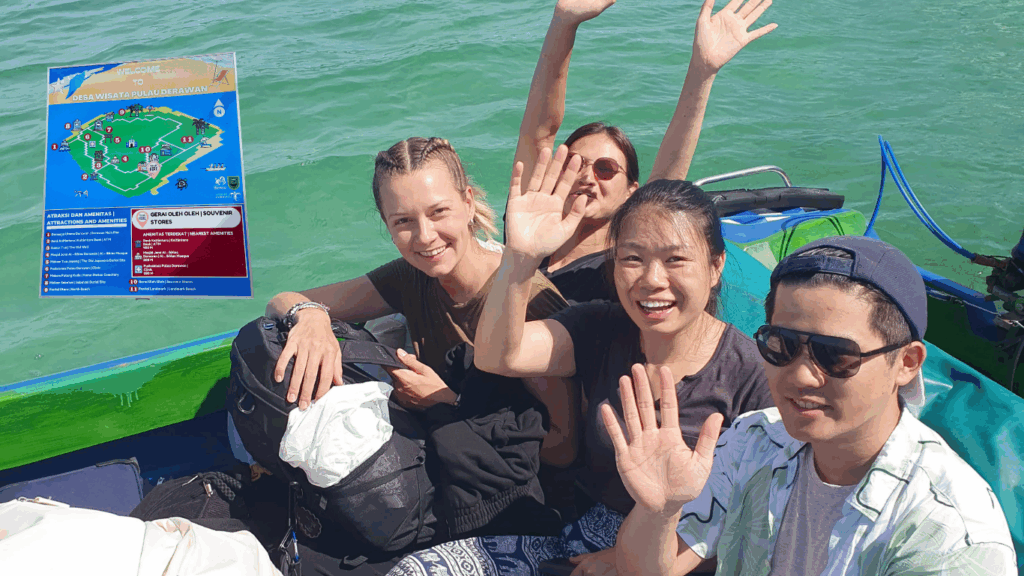
There’s a place in the Celebes Sea where time slows down, manta rays drift through turquoise water, and dive boats are the only traffic you’ll hear. But to get there, you don’t just book a flight and show up—you embark on a journey.
If you’re wondering how to get to Scuba Junkie Sangalaki, you’re not alone. It’s not on every map, and that’s the magic. This isn’t just travel—it’s a rite of passage for those ready to trade the ordinary for the unforgettable.
So, grab your fins, pack a dry bag, and let’s begin.
Most stories begin with a flight, and this one is no different. Your first goal is to reach East Kalimantan, in Indonesian Borneo. It’s where your real adventure begins.
There are two main ports for arrival: The airport in Berau, known as Kalimarau airport (BEJ) or the ferry port in Tarakan. Which one you choose depends on where you’re coming from—and how much of a tale you want to tell.
The most straightforward route from within Indonesia is to fly to Berau (BEJ) via Jakarta (CGK).
There are daily flights departing from Jakarta with Batik Air. It’s a super early start to the day (with flights generally departing around 4am), but it will mean you will land in Berau with enough time to transfer directly to Derawan on the same day. If you are flying internationally into Jakarta, there is a handy onsite airport hotel that you can stay at for convenience.
Another option could be via Balikpapan (BPN), another well-connected airport for international arrivals, and also allows for direct flights to Berau (BEJ).
But here’s the thing—flights into Berau from Balikpapan never align perfectly with the boat schedule to Derawan (in order to transfer across to Derawan on the same day, you would need to land no later than 1pm). That’s why almost everyone who chooses this route, spends the night somewhere along the way. And that’s okay. It’s part of the charm—waking up knowing you’re one step closer to paradise.
Popular hotels to stay in Berau:
The next morning, you’ll drive through quiet roads and fishing villages to the coast, where your speedboat to Derawan waits.
With the wind in your hair and the sea in your eyes, this is the moment you realize—you’re almost there.
If your story begins in Sabah, Malaysia, or you’re arriving from Scuba Junkie Sipadan, this route is made for you.
Your dive day in Semporna ends around 5 PM. From there, take a taxi to Tawau—a sleepy town by the water, just 1.5 hours away.
The next morning is when things get exciting.
Board a public ferry at the Tawau terminal—don’t worry, it’s comfortable—and let it carry you across the ocean to Tarakan, Indonesia. The ticket booth is open from 8:00 to 9:00 AM only, so please make sure to be there during that time.
Please note that there is no direct ferry between Tawau and Tarakan (and vice versa) on Sundays.
When you arrive in Tarakan, hail a Grab or Gojek (yes, Indonesia’s version of Uber) for about 10,000–20,000 IDR, and head to your hotel.
Hotel suggestions in Tarakan:
🌐 Tip: Pick up a local Telkomsel SIM card while you’re here for reliable 4G at the resort.
Your arranged transfer boat leaves the next morning. It’s the final stretch—the part of the story where the world slips away and your island dreams start to become real.
⛈️ Weather can shift plans. If seas are rough, transfers may be delayed or rerouted for safety. It’s rare—but it’s island life.
If weather or cost changes your plan in Tarakan, there’s a scenic, lesser-known route that’s perfect for adventurous souls:
It’s long. It’s winding. But it’s a beautiful way to see more of Borneo. And it often comes with fewer crowds.
📣 If you’re arriving via Bali, don’t forget the Tourism Levy
Money:
Bring plenty of cash. There are no ATMs for foreign cards on Derawan. Use ATMs in major airports, Berau, Tarakan, or exchange money before arrival. Card payments are accepted at the resort with a 2% bank fee. Meals & Prices:
Your package includes breakfast daily and lunch on dive/snorkel days. For dinner and non-diving days:
Extras (cash only):

Connectivity & Power:
Toiletries:
Not provided—bring your own. You can buy basics in the village, but choices are limited.
Health & Insurance:
Weather:
You won’t arrive by accident. No one stumbles into Scuba Junkie Sangalaki by chance. But those who make the journey—overland, over sea, across borders and waves—find something rare.
A place that feels like yours. A reef that still whispers. A sky so full of stars it silences you.
So come ready to travel. Come curious. Come prepared. But above all—come excited. Because now you know how to get to Scuba Junkie Sangalaki.
And your story is just beginning.
Leave us a comment below—we’d love to hear where your journey begins 🌍
“Can I visit Kakaban stingless jellyfish lake during my visit?” has to be one of our most frequently asked questions… And with good reason! There are very few of these lakes in the world and it’s a trip not to be missed. It’s a surreal experience and the photos will leave your Instagram followers wishing they were there with you! Swimming and snorkelling in the mangrove lined lake, surrounded by jungle sounds and thousands of stingless jellyfish makes you feel like you’re in a sci-fi movie… And no, they really can’t sting you!
The jellyfish lake is on Kakaban Island, which is about an hour speedboat ride away from our base on Derawan. The huge 5 hectare lake pretty much takes up the whole of the interior part of the island, and at its deepest point it’s 17m deep! Once you reach the islands jetty and gorgeous white sand beach there’s a short walk up some steps and over a bridge through the forest before you reach the lake – It takes about five minutes. Once you reach the edge of the forest you can walk down the steps to the jetty – It has steps and a low platform so that you can get in and out easily and without jumping. We usually get to spend about 45 minutes at the lake during one of our surface intervals, plenty of time for a good snorkel and some photos.
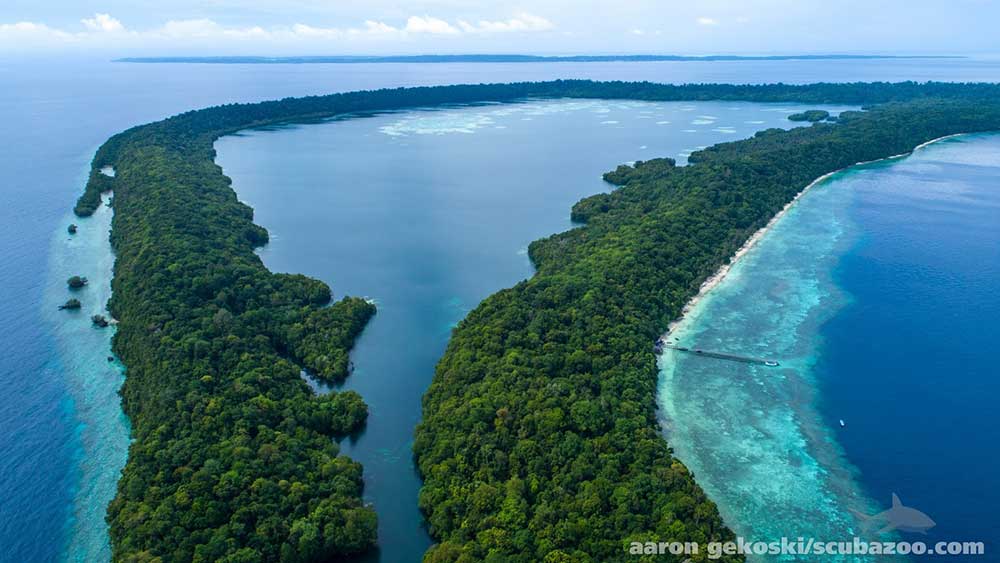
The age of the lake is estimated to be about 11,000+ years old. It is thought that the lakes formation occurred during a time period called the Holocene (a “geological epoch”), where sea levels rose as much as 35m. When the sea levels rose the sea water filled the inside of the island, when the sea levels reduced again the sea water was trapped inside the island, forming the lake. With rainfall over the years it has mixed together and become brackish water.
The jellyfish inside it (once ocean dwellers) have survived and evolved – they no longer need to sting as there are no predators for them, and so the stingless jellyfish lake came into being!
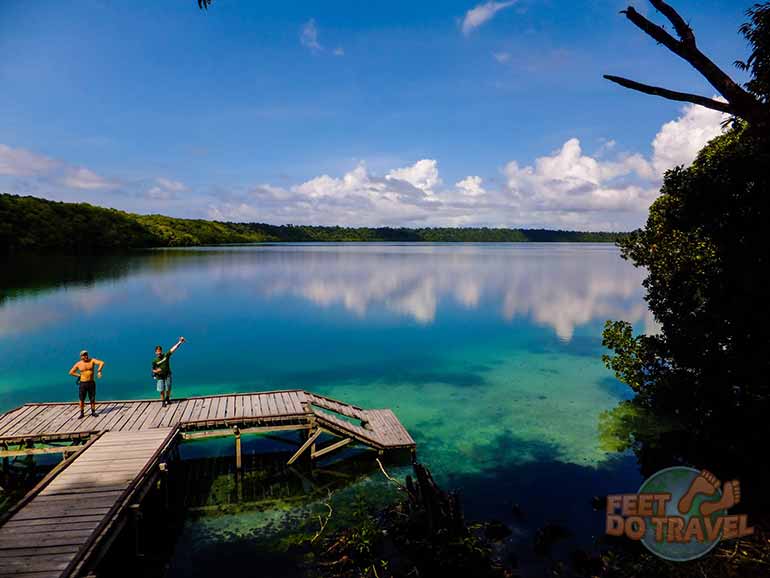
There are actually four species of stingless jellies in Kakaban’s lake:
The largest of the lake’s jellyfish, up to 30cm across. They are transparent and plate-sized. As they’re transparent they’re a little hard to see, but once your eyes adjust you can spot them easily!
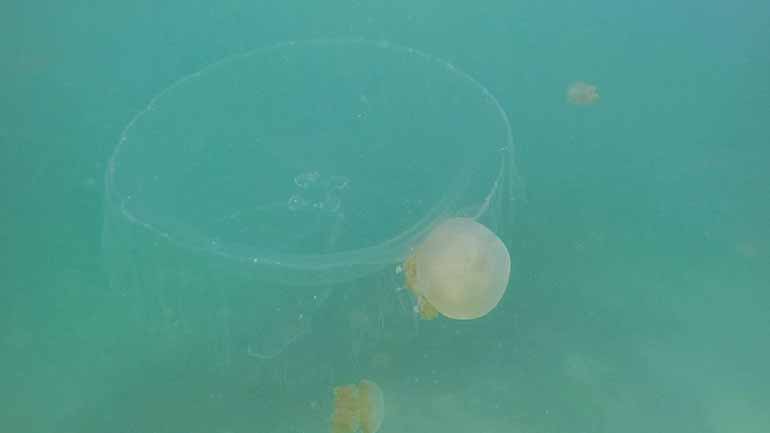
This is the smallest of the jellyfish species in the lake. Their bodies are smaller than 1cm and their tentacles perhaps 3-4cms long. There aren’t so many of them (compared to the other species), so with their transparent colour and tiny size it makes them the most tricky to spot! (Don’t worry about the name these ones don’t sting!)
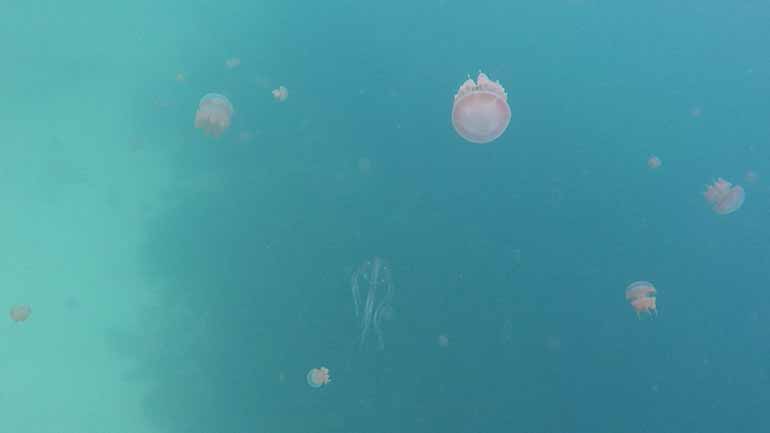
These are the ones you have probably seen in the photos – there are thousands upon thousands of them and you don’t have to swim the entire lake to find them! As soon as you get in the water, they’re right there! These grow up to 20cm across, but there are plenty of small ones in there too.
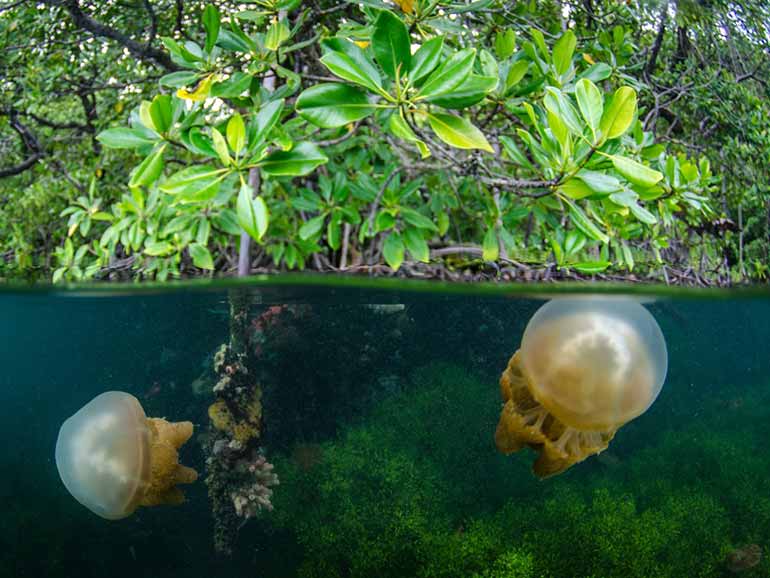
These look quite similar to the spotted jellyfish, but you’ll find them (you guessed it!) upside down on the sandy bottom of the lake. They are of a similar size to the spotted jellyfish – up to 20cm.
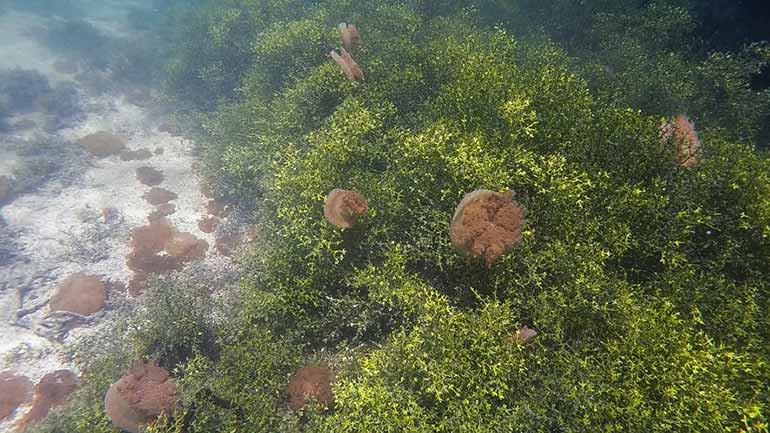
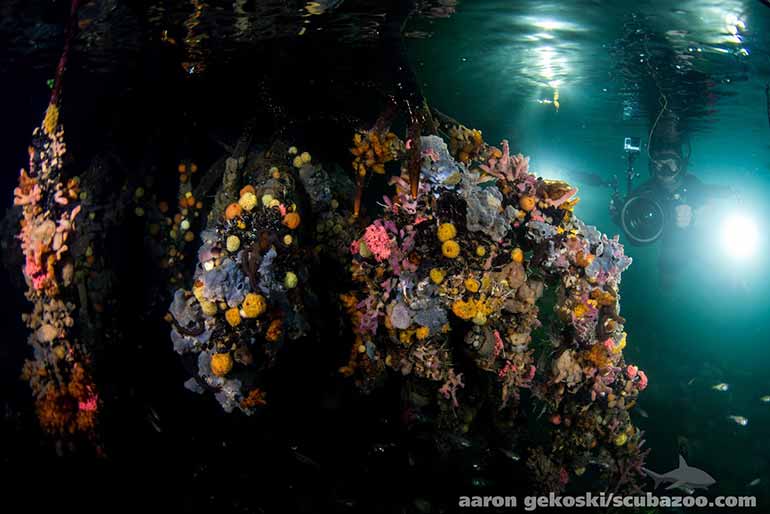
It’s not just home to thousands of jellyfish! You’ll find sponges, sea cucumbers, gobies and sea grasses in there, plus the beautiful mangrove trees line the edge of the lake. And when you pop up to have a look round you can hear the amazing jungle sounds of the uninhabited island.
We know we’re not technically in the sea here, but as just as we do in the ocean we adhere to the correct environmentally aware protocol in the lake as well. This involves:
Also – in terms of dive safety we don’t duck dive / skin dive as we usually visit on our surface interval!
You definitely want your mask and snorkel, plus something to cover up with like your rash guard or wetsuit! As the walk to the lakes jetty is over wooden steps you might want to bring your flip flops or wear your dive booties. You’ll need some Rupiah cash as you make a small donation upon entry (Rp 20,000 per person). And of course: your camera! Otherwise how will you make your friends jealous of this amazing experience?!
Trips to Kakaban (and therefore the amazing jellyfish lake) are available with our dive & accommodation packages which include 4 diving days or more.
Traveling between our two incredible dive destinations in Borneo (Malaysia and Indonesia) is a breeze! This is why it is such an ideal package to visit two amazing places within a certain time limit.
Tarakan operates daily flights from Jakarta and three weekly flights from Tawau, Malaysia. Your flight would need to land by 11:30am if you’d like to reach Derawan on the same day. We run a two weekly transfer boast between Tarakan and our resort on Derawan on Mondays and Thursdays at 12.30pm which is between 2-3 hrs, if you are wanting to transfer on a day other than a Monday or Thursdays then we can help arrange a charter boat or an alternative route which would be a little longer.
There are daily flights from various airports throughout Indonesia, with the majority of them connecting in Balikpapan. To arrive in Derawan on the same day, your flight must arrive in Berau by 2p.m. Transfers from Berau airport to our resort on Derawan are available every day of the week and take approximately 3 – 3.5 hours.
There are several daily flights from KL to Tawau (with either MAS or Air Asia), from here you can either do a package with Scuba Junkie Sipadan and get a transfer to Mabul island or transfer directly to Tarakan. You can also fly from KL to Jakarta, where you can change to Berau for an alternate route direct to Scuba Junkie Sangalaki.
If you’re coming in from Scuba Junkie Sipadan then you would transfer to Tawau airport (TWU) and then take the short 30 minute MAS Wings flight to Tarakan.
The flight departs on Mondays, Thursdays and Saturdays, and on Mondays and Thursdays we have a transfer service between Tarakan and Derawan. If you’re diving with SJ Sipadan before your trip to SJ Sangalaki your Sipadan / Mabul package should end on a Sunday, and then you will need to stay one night in Semporna. Check out more details of the combo trip here.
The MAS Wings flight arrives at 11:10 a.m. From Tarakan airport, a driver will be waiting for you, and you will take a short transfer to Tarakan port, where you will board the transfer boat. The boat ride from Tarakan to Derawan takes 2.5-3 hours, depending on the conditions.
There are also routes available from our other Indonesian resorts; more information on these can be found here.
Please keep in mind that all of the information below was correct prior to Covid-19. Flight itineraries are changing rapidly around the world, so we recommend that you double-check with the airlines directly for the most up-to-date information, or send our booking team an email and we will be happy to give you some friendly advice.
We can’t wait to welcome you to Scuba Junkie Sangalaki for an unforgettable dive experience. We know it can be difficult to find the best flight options, so please contact us if you have any questions or issues finding flights, and we will be more than happy to assist you in finding the most convenient route.