



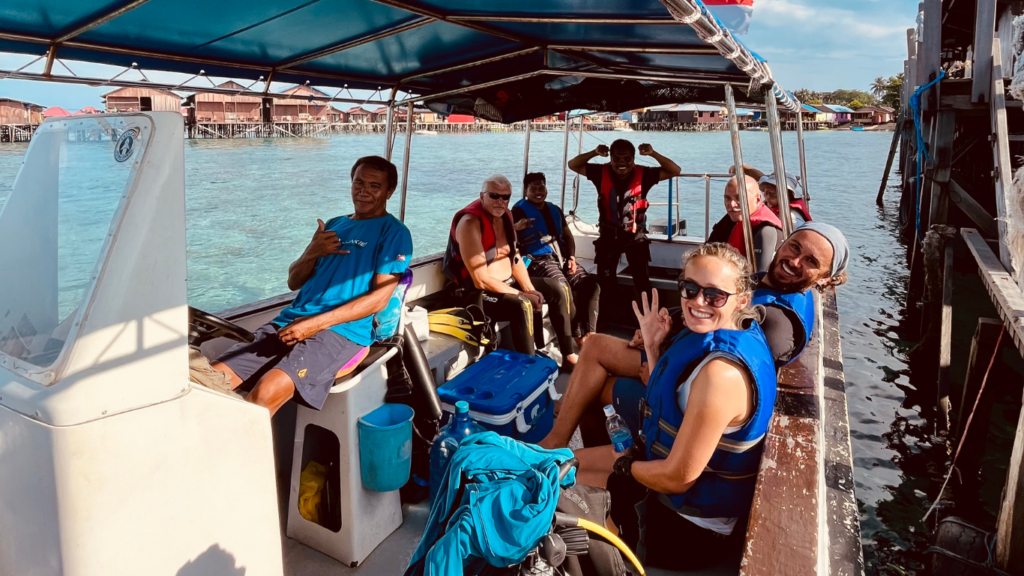
A dive group may share one boat and one briefing, but every diver arrives with a different story. One has hundreds of dives and wants to watch animal behaviour. Another has just completed a course and needs a little more time at the surface. One carries a camera. Another simply wants to slow down and look.
At Scuba Junkie Sangalaki, the maximum group size is four divers per guide. Groups are also organised with certification and experience in mind.
That number is not only a logistical detail. It changes the character of the whole day.
A certification card gives a guide useful information, but it cannot explain everything. It does not show how recently somebody dived, how comfortable they feel in a new environment or which details make a dive special to them.
In a small group, a guide has more opportunity to notice those things. Conversations on the boat, questions during the briefing and the first minutes underwater all help the guide understand the group.
This does not mean every dive becomes a private itinerary. Conditions, safety and the needs of the full group still guide each plan. It does mean the people in the group are easier to see as individuals.
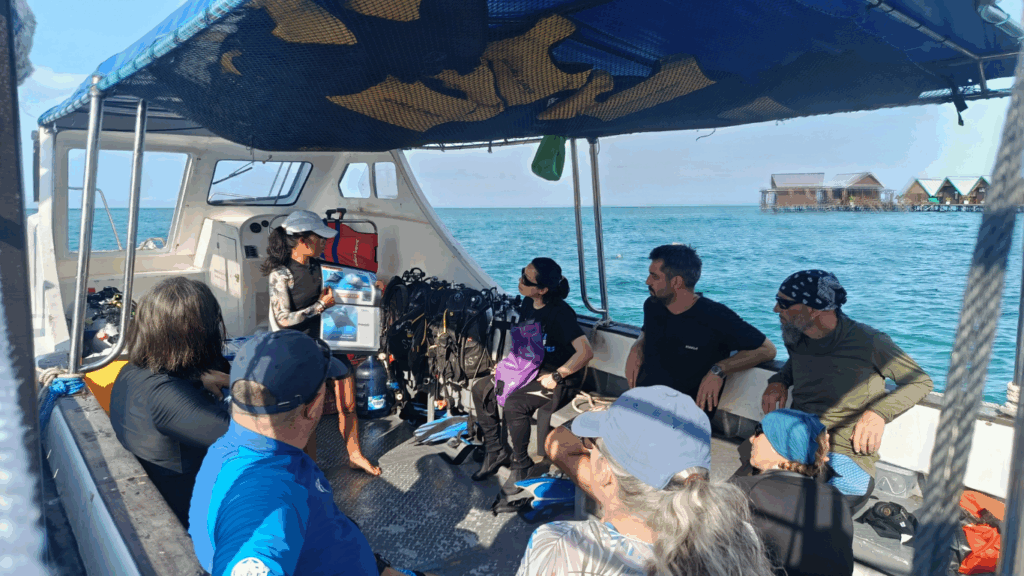
The best briefings do more than describe a route. They connect the dive plan with the divers who will follow it.
With four people, there is space for questions. A diver can mention that they want help with a piece of equipment, have not dived in current recently or hope to practise a particular skill. The guide can check that everybody understands the plan and explain how the group will respond if conditions change.
The result can feel more like a conversation than a speech.
Large groups naturally stretch out. A small difference in swimming speed grows, a diver stops to look at something and the distance between the front and back increases.
Smaller groups are often easier to keep connected. Divers can see the guide, buddy teams can communicate and the guide can respond sooner when somebody needs attention.
This does not remove personal responsibility. Every diver still needs to monitor air, stay aware of their buddy and dive within their training and comfort. A smaller group simply creates a clearer environment for those good habits.
Marine life does not perform on demand, and sightings are never guaranteed. When an encounter happens, the way a group approaches it matters.
A small group can be easier to position without surrounding an animal or crowding one viewpoint. It gives divers a better chance to slow down, follow the guide’s signals and observe behaviour without rushing forward.
Four calm divers will not become invisible, but fewer bodies and fins can make a wildlife encounter feel less chaotic for everyone involved.
Photographers sometimes want a few extra seconds to frame a subject. Non-photographers may not want to wait behind a wall of cameras. These needs can seem incompatible, but thoughtful grouping and clear communication help.
When the guide knows who enjoys photography and who prefers continuous exploration, expectations can be discussed before entering the water. The group can agree on how to share space and keep moving together.
The aim is not to give one diver priority. It is to help everybody understand the rhythm of the dive.
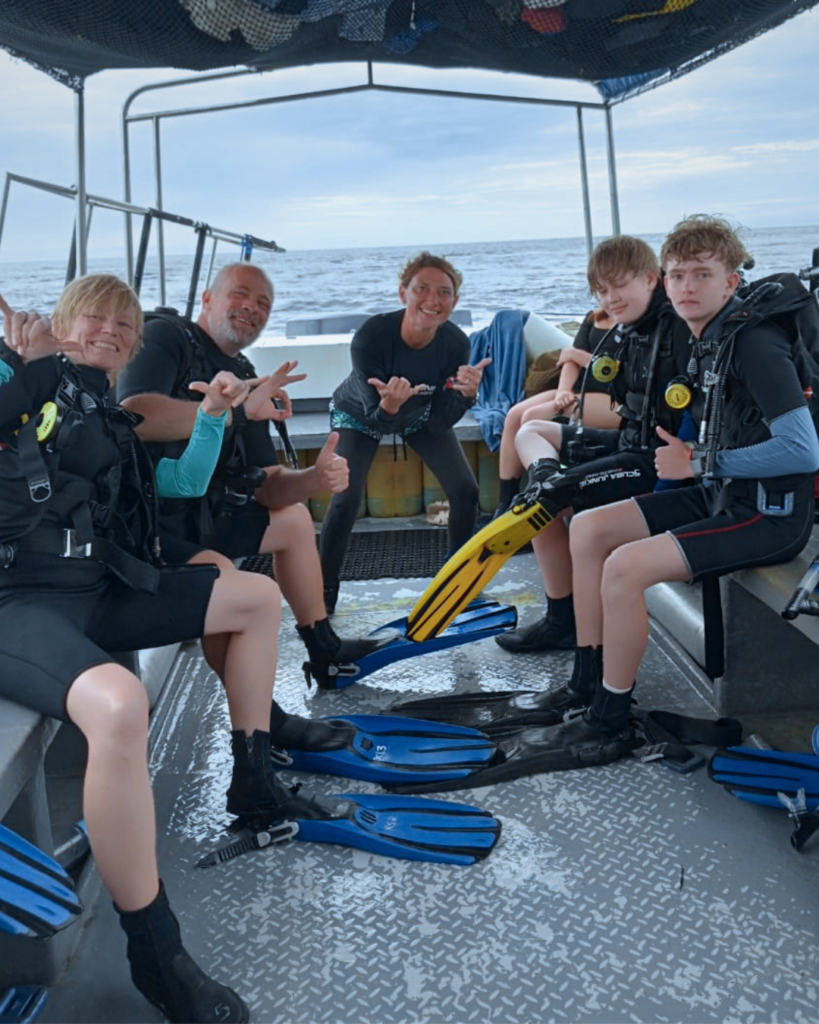
Sangalaki attracts people who come specifically for diving, but not every guest has the same experience. Somebody may be comfortable in warm, clear water yet unfamiliar with a new entry style or moving water.
In a small group, the guide can offer a reminder or check understanding without turning it into a public lesson. There is often more room to descend steadily, adjust equipment and settle into the dive.
Current does not automatically make a dive difficult, and a newer diver does not automatically need a separate experience. Good planning considers the actual person, the day’s conditions and the group as a whole.
Scuba Junkie Sangalaki is a small operation. The team and resort are both much smaller than at Sipadan, and that is part of the destination’s identity.
Guests often stay for at least seven days, which gives everyone time to move beyond introductions. Dive preferences become familiar. Stories continue over meals. The island stops feeling like a base between dives and becomes part of the experience itself.
Small-group diving fits naturally into that rhythm. It is one expression of a place where people have time to know one another.
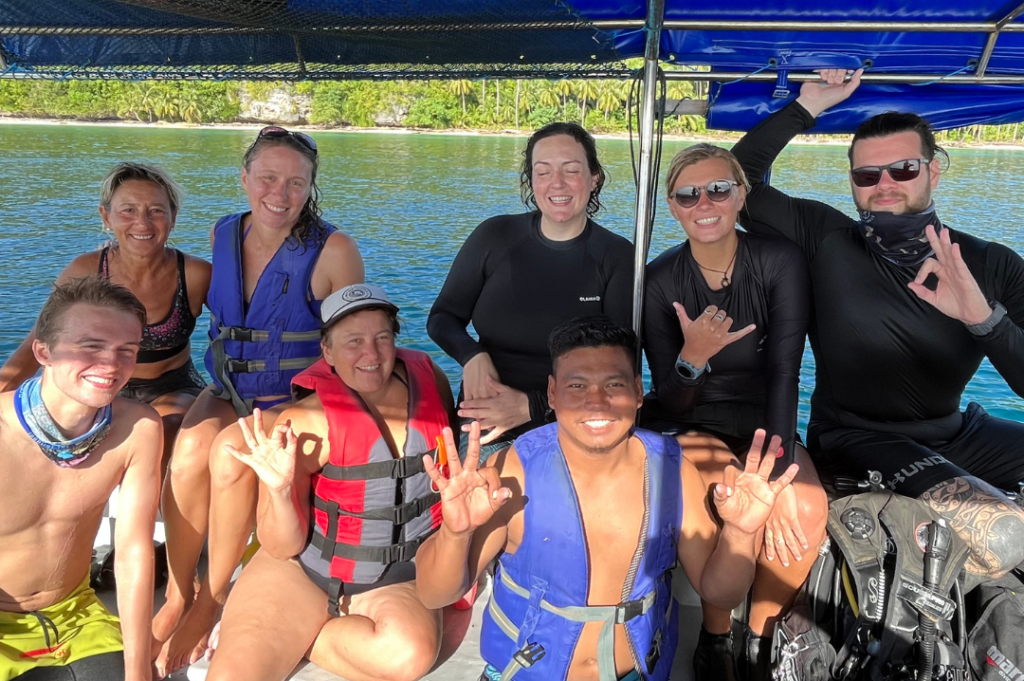
A small group does not guarantee a specific animal, an empty dive site or perfect conditions. It also does not mean that every request can change the day’s plan.
What it offers is attention. The guide can communicate clearly, understand the group and make decisions with fewer competing needs. Divers have space to ask, observe and share the experience.
In a remote destination, those details matter. Reaching Sangalaki takes intention. Once guests arrive, the experience should feel equally considered.
Scuba Junkie Sangalaki limits groups to a maximum of four divers per guide.
Yes. Certification and experience are considered when groups are organised, together with the guests and diving planned for the day.
No. A small group is still shared. A private guide is a separate arrangement and depends on availability.
No. Experienced divers also benefit from clear communication, easier group awareness and more room to observe marine life.
No operator can guarantee that no other divers will be present. Sangalaki is remote and sites are often quiet, but conditions and other visitors vary.
The number four is simple. Its effect is not.
It gives a guide more opportunity to know the divers in front of them. It gives questions room, makes communication clearer and supports a calmer shared rhythm underwater.
Small by design does not mean small in experience. In Sangalaki, it means the people, island and diving have time to become familiar.
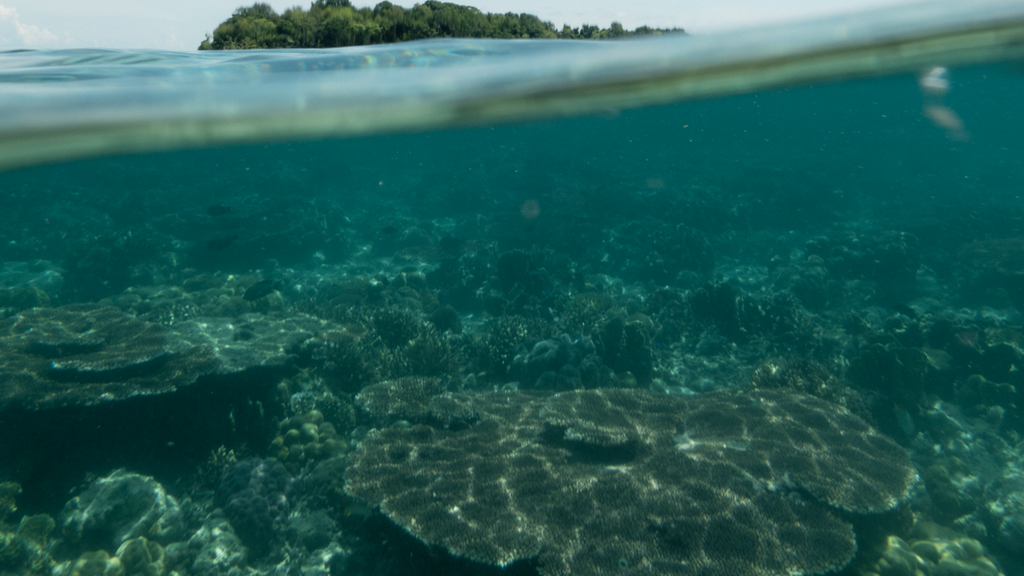
There is a particular feeling that comes with travelling to a remote island. The roads disappear, the boat ride gets longer and the noise of everyday life becomes quieter. By the time a diver rolls into clear water above a healthy reef, it can seem as though the outside world has been left behind.
That feeling is one of the reasons people travel to the Derawan Archipelago. The distance is part of the experience. So are the small communities, the pace of island life and the possibility of diving without many other groups in the water.
But remote does not mean protected. A reef can be far from a large city and still be connected to every change happening across the ocean.
Some local pressures are easier to see in heavily visited places: busy boat traffic, crowds at entry points, damaged coral and wildlife surrounded by swimmers. When those signs are absent, it is natural to assume that a remote reef is untouched.
Distance can help. Fewer visitors may mean less direct pressure, and limited coastal development can reduce some forms of pollution. Yet a reef’s appearance on one beautiful day does not tell its entire story. Coral ecosystems are shaped by water quality, temperature, fishing activity, weather, tourism practices and the health of connected habitats.
The sea does not recognise the boundaries that look so clear on a map.
The United Nations Environment Programme identifies climate change as the largest global threat to coral reefs. It also highlights local pressures such as pollution, sediment and nutrients entering the water, overfishing and destructive fishing practices.
Remote locations are not separated from these forces. Warmer water can reach a reef whether the nearest airport is ten minutes away or several hours away. Marine debris can travel long distances. Fish populations move between habitats, and changes in one part of an ecosystem can affect another.
This is why clear water should not make us complacent. A reef may look magnificent and still benefit from active care.
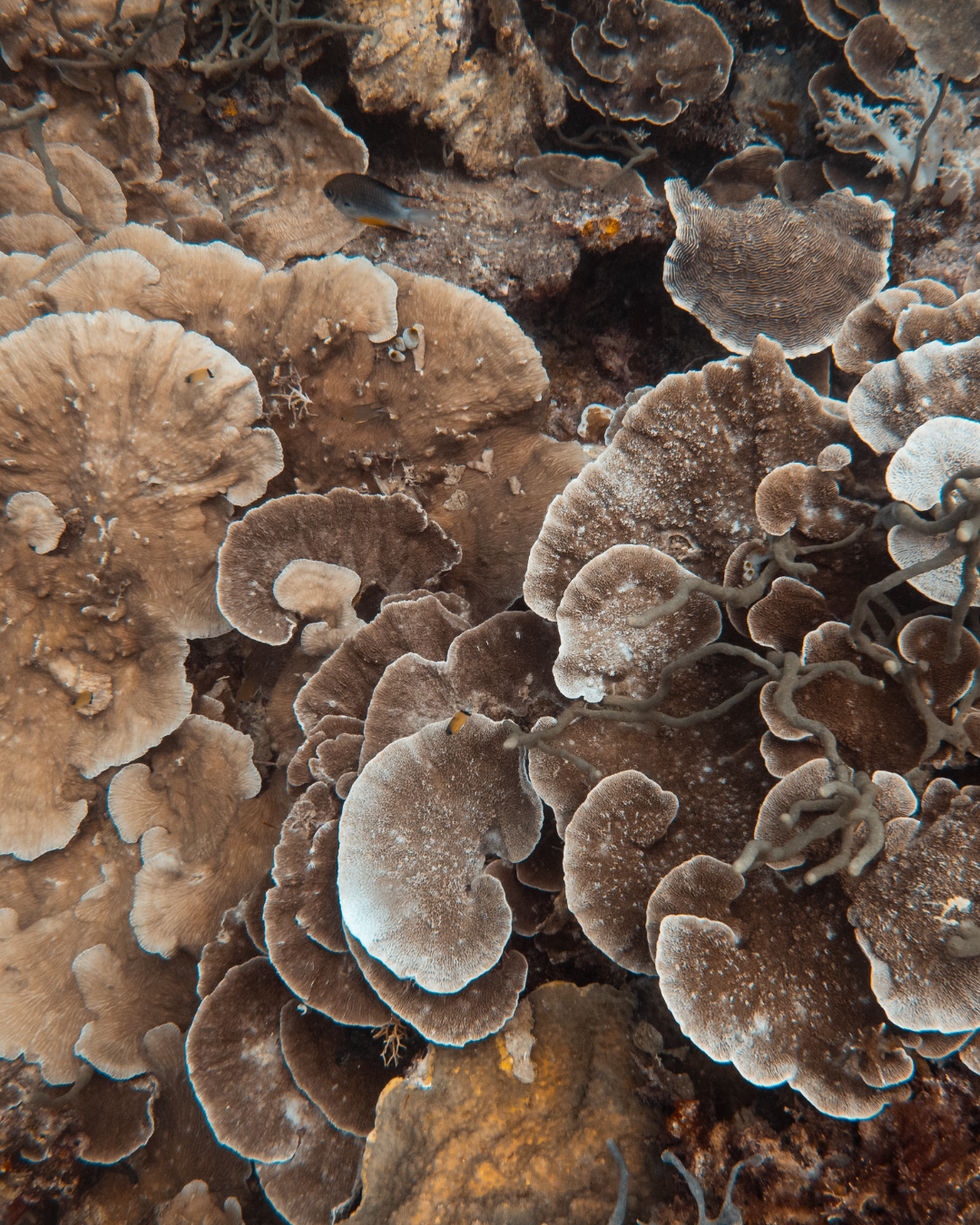
Conservation is often discussed in response to visible damage. Protection is more effective when it also supports places that remain healthy.
Local knowledge matters here. People who live and work around an island see patterns that a short-term visitor cannot. They notice changes in seasons, sightings, currents and human activity. Dive teams spend repeated days in the water and can recognise when a familiar site behaves differently.
This kind of observation does not replace scientific research, but it can support it. Recording sightings, sharing photographs for identification projects and reporting unusual conditions can turn ordinary dive days into useful information.
At Scuba Junkie Sangalaki, shark and ray sightings are logged and manta photographs can contribute to identification work. A manta encounter is still an extraordinary moment for a guest, but the image may also become part of a much longer conservation story.
Tourism is not automatically good or bad for a reef. Its impact depends on how it is managed.
Poor practices can damage the environment through careless contact, anchoring, waste, wildlife disturbance and overcrowding. Better practices can reduce those pressures while supporting local employment, environmental education and conservation activity.
Green Fins focuses on practical environmental standards for marine tourism because reducing local pressure can help reefs remain more resilient. For divers, many of the most useful actions are simple: maintain good buoyancy, avoid touching or chasing wildlife, secure equipment, follow the guide’s instructions and choose operators that treat environmental practice as everyday work.
These choices may feel small. Repeated across many dives and many visitors, they matter.
Divers often remember the largest animal from a dive, but useful observations can be much broader. A guide may record a shark or ray sighting. A clear photograph may help identify an individual manta. Changes in coral condition or unusual marine life behaviour may be noted and shared.
Citizen science works best when information is collected consistently and connected with credible projects. It also changes the way people look underwater. A diver begins to notice patterns, markings and relationships rather than simply collecting sightings.
The goal is not to turn every holiday into fieldwork. It is to recognise that enjoyment and attention can exist together.
A remote reef is not an empty wilderness. It is connected to communities whose lives, knowledge and livelihoods are tied to the sea.
Long-term protection cannot be separated from local people. Conservation becomes stronger when communities have a meaningful role, when tourism creates responsible employment and when environmental decisions respect local knowledge.
Visitors can support this by arriving with curiosity, learning about the island as well as its wildlife and understanding that the destination is somebody’s home.
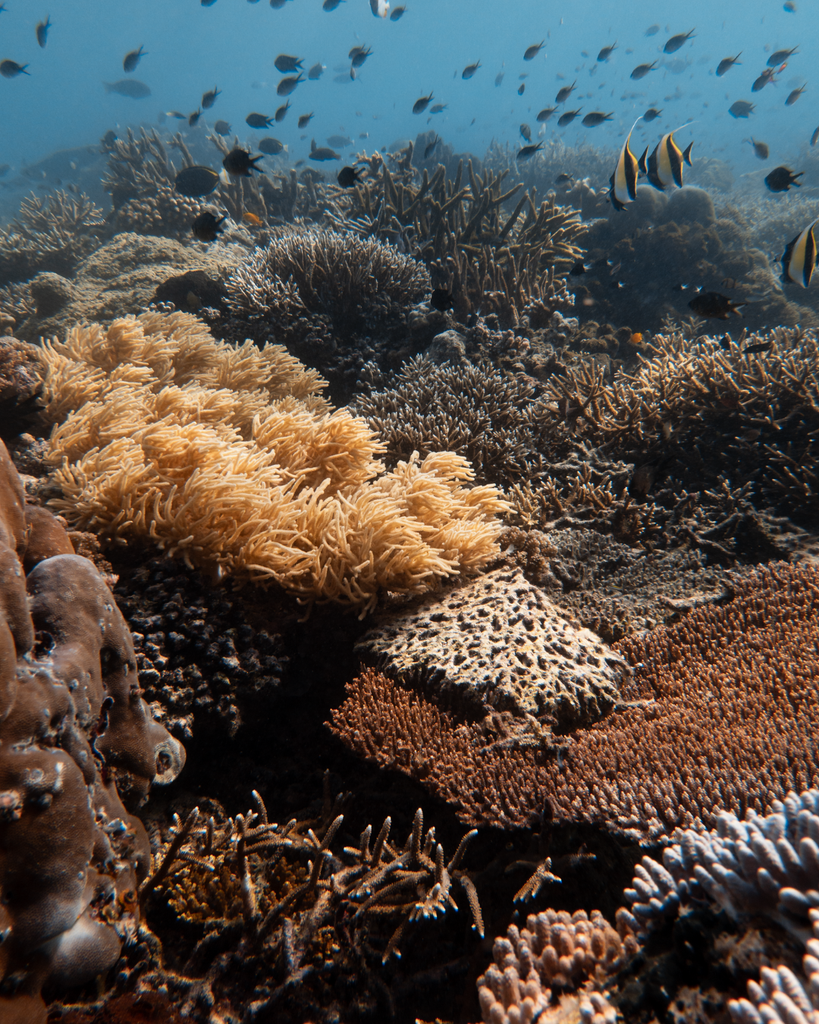
The phrase “still pristine” can unintentionally suggest that protection is not urgent. In reality, a healthy reef is a reason to act now.
Careful tourism, monitoring, education and local participation help maintain the conditions that make a place special. None of these actions offers a perfect shield against global change. Together, they can reduce avoidable local pressure and give an ecosystem more room to cope.
The hopeful part of this story is simple: there is still so much worth protecting.
No. Some may experience less direct tourism or development pressure, but they remain connected to global and regional changes in the ocean.
Practise good buoyancy, avoid touching coral or wildlife, keep equipment secured, follow local guidance, reduce waste and choose responsible operators.
Sometimes. Clear photographs of manta rays and other individually recognisable animals may support identification databases when submitted through the appropriate project.
People who spend years around the same islands and dive sites can observe seasonal patterns and changes that a short visit may not reveal.
Any visit has an impact, but thoughtful management and responsible behaviour can reduce it. Tourism can also support local livelihoods, education and conservation activity.
A remote journey can make the ocean feel far from ordinary life. In reality, it reminds us how connected everything is.
Come for the clear water, the reefs and the chance to spend time in the rhythm of an island. Leave with a deeper understanding that distance alone cannot protect any place. People do that, through attention, collaboration and thousands of careful choices.
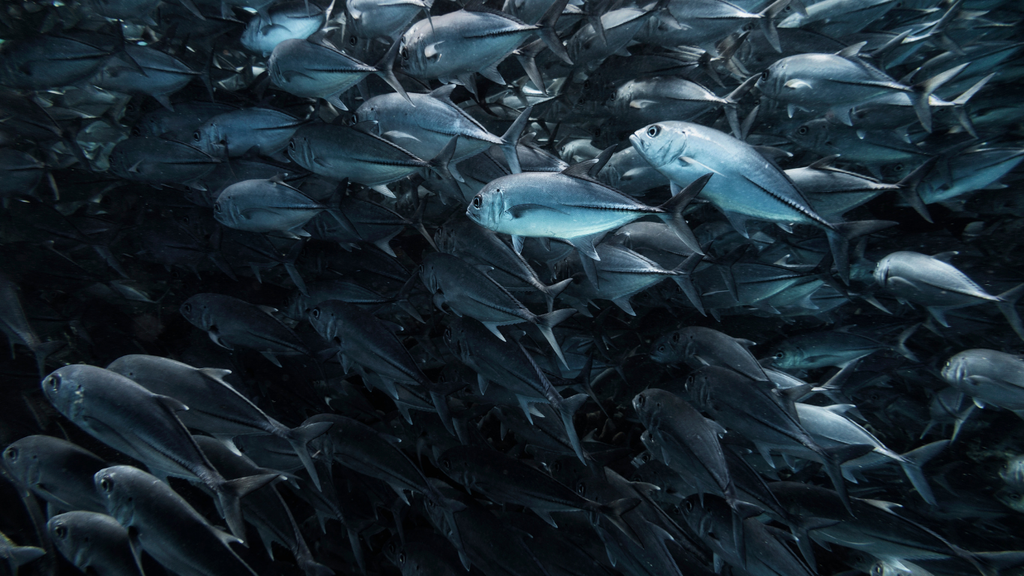
Fish behaviour can change before a diver has even noticed that the water is moving.
A school that appeared scattered begins to face one direction. Small reef fish rise higher above the coral. Barracuda tighten their formation. Other fish disappear behind a ridge, choosing a quieter pocket of water while the exposed side of the reef becomes busier.
To us, current can feel like a condition we need to manage during a dive. For marine life, moving water is part of the environment they read constantly. It can carry food, change the effort required to hold position and influence where an animal chooses to feed, rest or wait.
Once divers begin noticing these responses, a reef stops looking like a collection of animals and starts feeling like a living system.
Current is not simply water pushing in one direction. Its speed and direction can change with tides, weather, depth and the shape of the reef. A wall, channel, ridge or coral head can redirect the flow, creating fast-moving areas beside sheltered pockets.
Fish behavior respond to that changing environment. Their position may reveal where food is arriving, where swimming requires less energy or where the reef offers protection. Two parts of the same dive site can therefore look completely different at the same moment.
This does not mean that current controls every movement a fish makes. Light, temperature, predators, reproduction, habitat and the presence of other animals also influence behaviour. Current is one part of a much larger conversation.
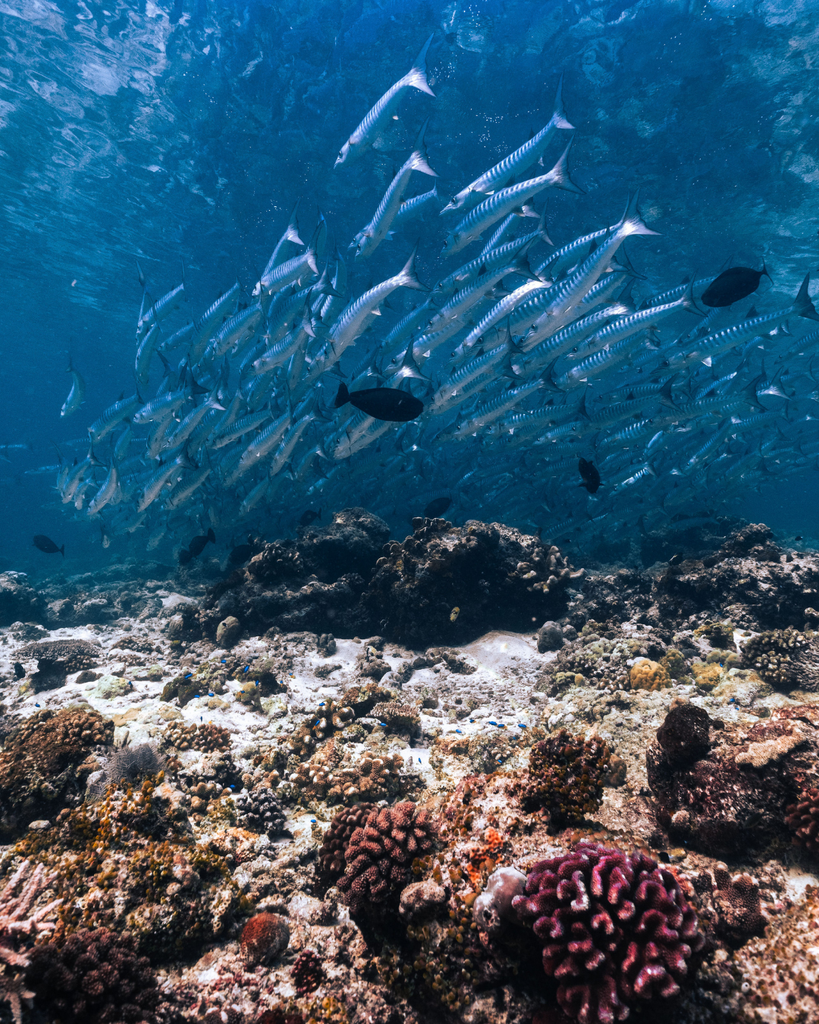
One of the easiest patterns for divers to notice is a group of fish facing the same direction. They are often facing into the flow.
For species that feed on drifting plankton, this position allows food to arrive from in front of them. Instead of chasing every small item through open water, the fish can hold near a productive part of the reef and intercept what the current delivers.
Facing the flow can also help a fish maintain a stable position and respond to changes in the water. The exact reason depends on the species, the location and what the fish is doing. A neat line of fish does not always mean feeding, but it is a useful clue.
Look closely at smaller reef fish above a coral head. They may rise into the moving water to feed, then retreat towards the reef when conditions change or a possible threat approaches.
Current transports tiny organisms and suspended material across the reef. This creates feeding opportunities for planktivorous fish, corals and other animals that depend on food moving through the water column.
Research on reef planktivores shows that feeding behaviour is influenced by both prey density and flow. Faster water does not always mean a fish can capture more food. At some point, holding position and turning towards individual prey can become more difficult. Different species solve this problem in different ways.
Garden eels offer a wonderfully visible example. In gentler flow they may extend farther from their burrows. As current increases, they can shorten and curve their bodies to reduce drag while continuing to feed on drifting zooplankton.
On a reef, the richest feeding position is therefore not necessarily the place with the fastest water. It may be an edge where food passes within reach, a point where flow is redirected or a sheltered spot beside a more energetic area.
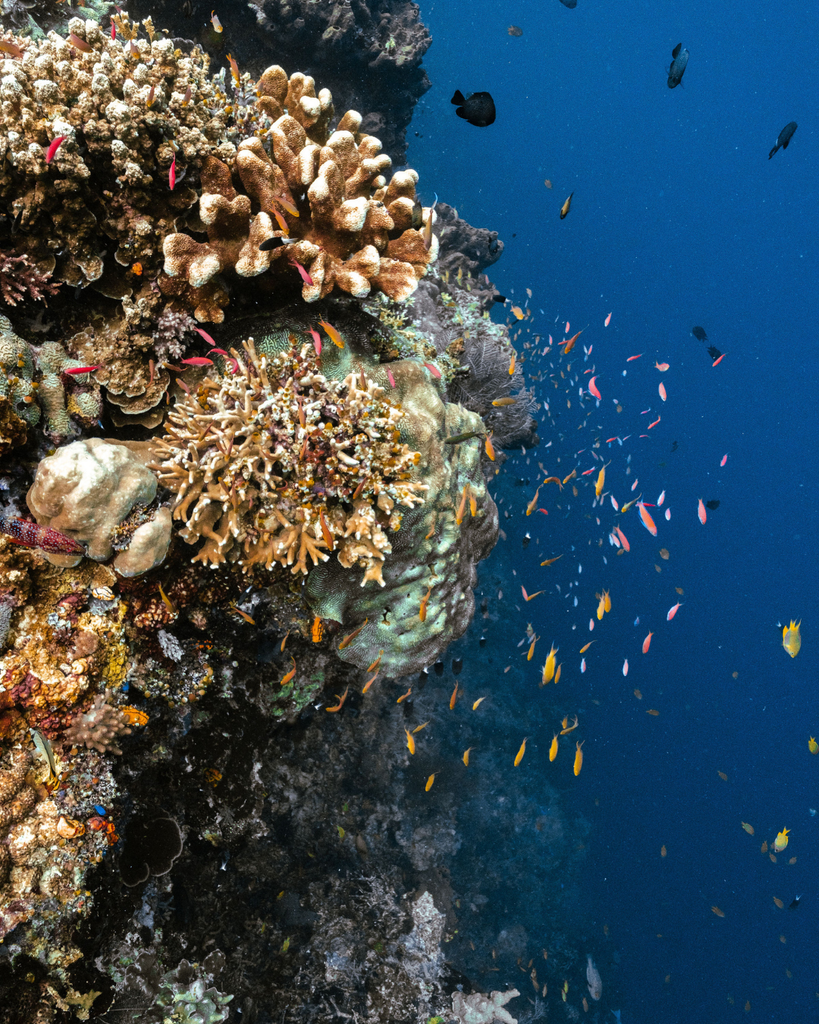
A school of jackfish or barracuda can look like a single enormous animal. Hundreds of individuals turn, compress and expand with astonishing coordination.
Schooling has several possible benefits. It can make it harder for a predator to isolate one individual, help fish respond rapidly to threats and allow information to travel through the group. Research also suggests that fish can sometimes gain hydrodynamic benefits by adjusting their movements in relation to nearby fish.
That does not mean every formation is a deliberate energy-saving pattern. Fish within a school are constantly responding to neighbours, food, threats and the surrounding water. The impressive shape we see may be the result of many small decisions happening almost simultaneously.
Current adds another influence. A school may align into the flow, become more compact or shift to a different part of the reef. When the water changes, the architecture of the school can change with it.
Coral reefs interrupt moving water. As current passes around a ridge, through a channel or over a coral head, it creates areas with different flow conditions.
Some fish move towards the exposed side where more food may be arriving. Others use the protected side of a structure to rest or reduce the effort needed to hold position. Divers do something similar when a guide leads a group behind a coral formation to pause in calmer water.
These quieter areas are sometimes called eddies or current shadows, although the flow around a real reef is complex and constantly changing. For a diver, the practical lesson is simple: water movement is rarely identical across an entire site.
Watching where fish gather can provide useful information, but it should never replace following the guide or checking the conditions directly.
Where prey gathers, predators may follow.
Jacks, barracuda and reef sharks do not appear simply because there is current, and no encounter can be guaranteed. However, moving water can help create productive areas where smaller fish feed or concentrate. Predators may patrol those edges, use the shape of the reef or position themselves near potential feeding opportunities.
This is one reason an active part of a reef can feel layered. Small fish face into the flow above the coral, a dense school forms farther into the blue and larger animals move around the outside. Every level is responding to both the water and the animals around it.
For divers, the most interesting action is not always directly in front of the reef. It is worth looking towards the edge of the school and occasionally into open water.
Divers sometimes return to a familiar site and wonder where all the fish have gone. On another day, the same reef seems almost overloaded with life.
The animals may still be nearby, but their position and behaviour can change with the flow. A school may move to another side of the reef. Planktivores may remain closer to shelter. Predators may patrol a different edge. During a change of tide, the whole scene can reorganise.
This is particularly noticeable around an archipelago shaped by channels, islands and tides. In the Derawan Archipelago, local knowledge helps guides understand how different sites tend to respond to changing water movement. Conditions are assessed on the day because an underwater landscape is never truly static.
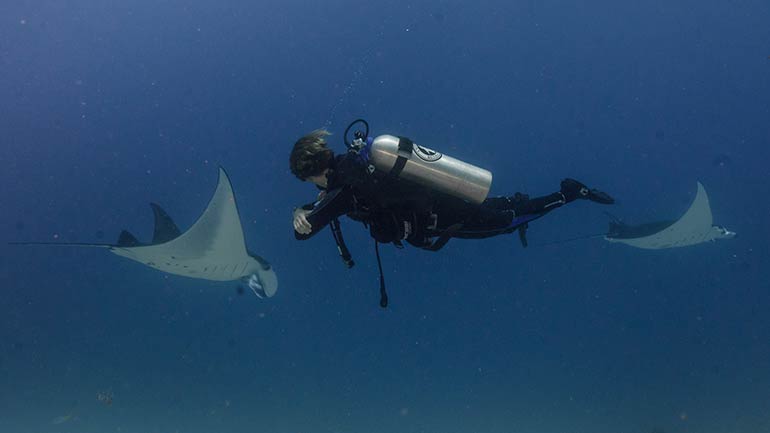
You do not need to identify every species to become a better observer of fish behavior.
Begin by looking at direction. Are most fish facing the same way? Notice position. Are small fish high above the reef or staying close to shelter? Look at the shape of a school. Is it loose, tightly packed, turning or holding steadily in one area?
Then watch for changes. A sudden compression may signal that the school is responding to a possible threat. Fish retreating towards coral may indicate a change in water movement or the approach of a larger animal. A group rising into the current may be feeding.
These observations are clues, not absolute rules. The pleasure comes from slowing down, forming a question and continuing to watch.
A wildlife checklist tells us which animals were present. Behaviour tells us what was happening.
The barracuda were not only there. They formed a wall, then turned into a spiral. The batfish were not simply swimming past. They were holding together in the flow. The small reef fish were not background colour. They were feeding in moving water and retreating to shelter in perfect coordination.
Learning to notice these moments can transform even a familiar species into the highlight of a dive.
Many fish face into the flow to hold position or intercept food carried by the water. The reason varies between species and situations, so direction should be treated as a clue rather than a universal rule.
No. Current can increase feeding opportunities, but very fast water may make feeding or holding position difficult for some species. Fish may also move to a different part of the reef.
A school may respond to current, nearby predators, food or the movement of neighbouring fish. Small individual reactions can spread quickly through the group.
Fish alignment can offer a clue, especially when many are facing the same direction. Divers should still rely on direct observation, their guide and appropriate dive procedures.
No. Habitat, food, temperature, tides, reproduction, cleaning activity and predator-prey relationships can all influence where animals gather.
Current is invisible until it moves something. A diver may notice it through bubbles, a waving sea fan or the effort needed to swim. Fish reveal it through behaviour.
Watch which direction they face, where they choose to wait and how a school changes shape. The longer you observe, the more the reef begins to explain what the water is doing.
That is when a dive becomes more than a list of sightings. It becomes a story unfolding in real time.
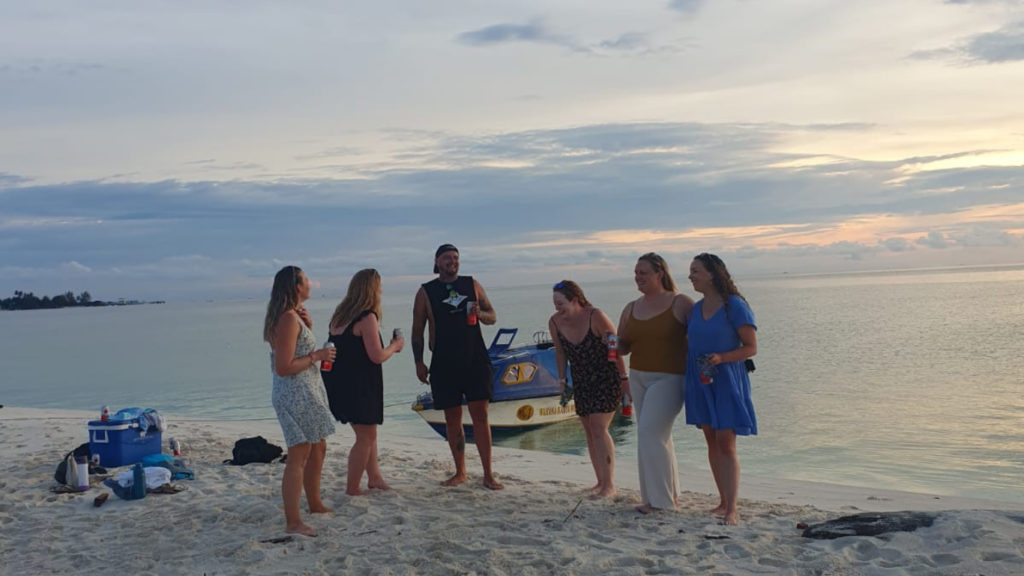
There is a moment on the journey to Derawan when the mainland begins to fall away. The road ends, the luggage moves onto a boat and the island slowly appears across the water. By then, most guests have already travelled farther than they would for an ordinary dive holiday.
That extra effort is real. We do not pretend that Derawan is the easiest place to reach. But ease is not the only measure of a journey. Some places feel special precisely because they ask you to slow down before you arrive.
This is why we normally recommend spending at least seven days in Derawan. A longer stay is not about filling every hour with activities. It gives the archipelago time to become more than a collection of dive sites. The diving remains the reason many people travel this far, but the rhythm of the island is often what stays with them afterwards.
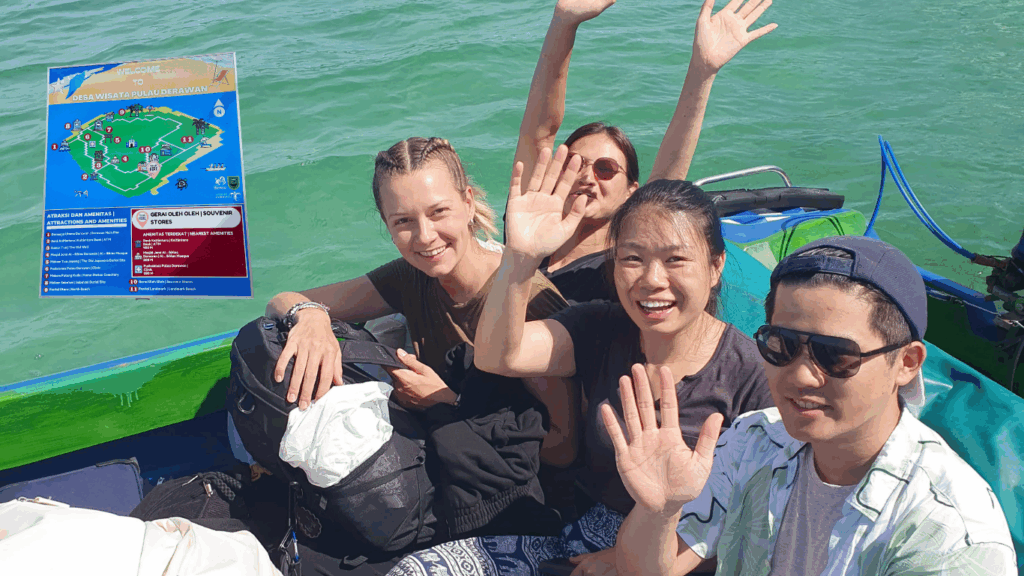
Scuba Junkie Sangalaki is based on Derawan Island in East Kalimantan. Reaching us usually involves a flight followed by an overland and boat transfer, depending on the route you choose. It takes planning, and current transport information should always be checked before travel.
When a destination requires that much intention, a rushed visit can feel like arriving just as it is time to leave. Seven days in Derawan gives you a first day to settle in and several days in which the pace begins to change. The route no longer feels like an obstacle. It becomes the threshold between ordinary life and island life.
You can find current route guidance on our Getting Here page, and our booking team can help you make sense of the available connections.
The Derawan Archipelago is not one repeated underwater experience. From our base on Derawan, dive plans may include Derawan, Sangalaki, Kakaban and Maratua, depending on the length of the package, weather and local conditions. Seven Days in Derawan allows you more chances of diving all islands.
Each area adds a different mood to the week. Derawan is known for turtles and rewarding macro life. Sangalaki is associated with manta encounters and reef diving. Kakaban and Maratua add their own landscapes, marine life and surface intervals. Across the area, healthy coral, turtles, sharks, rays, schooling fish and small reef creatures can all become part of the story.
No itinerary can guarantee a particular animal, and specific destinations remain subject to conditions. That honesty is another reason time matters. A longer stay gives the team more room to plan a varied experience around what the sea is doing rather than forcing every hope into one or two days.
Explore the character of the area on our Diving page. The wider Coral Triangle is recognised as a global centre of marine biodiversity by the Coral Triangle Initiative, but the joy of diving here is not found in statistics alone. It is found in how different one day can feel from the next.
Many divers arrive with one animal at the top of their list. Perhaps it is a manta, a whale shark, a turtle or a particular macro creature. We understand the excitement, but wild animals do not work to a booking calendar.
Seven days in Derawan gives expectations room to soften. Instead of asking every morning whether today will deliver the headline encounter, guests begin to notice more. A turtle feeding in the shallows. A guide pointing out an animal small enough to hide behind a fingernail. A reef that feels calm because there are often few other divers in the water.
The best wildlife experiences are not always the closest or the most dramatic. They are the ones that happen without chasing, touching or blocking an animal’s path. Giving the ocean space often gives us a better story in return.
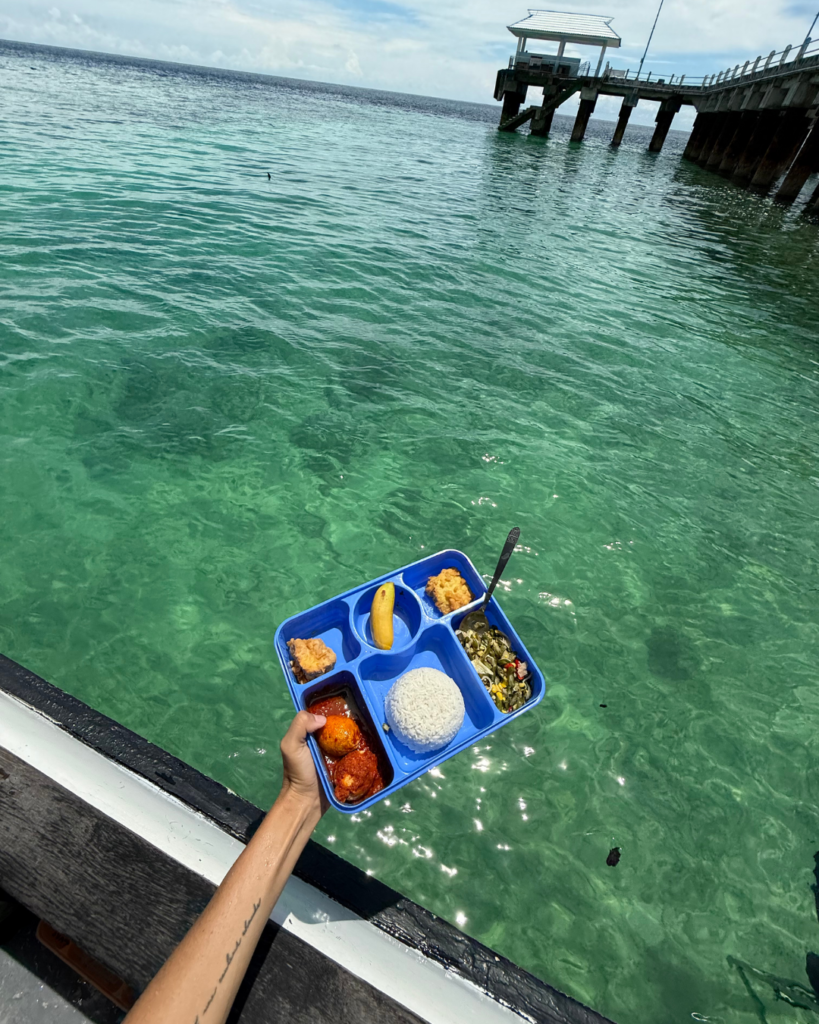
A dive holiday is never made only from the minutes underwater. At Sangalaki, the spaces between dives are part of the experience: breakfast with a view across the sea, coffee during a surface interval, lunch on the boat, a walk through the village, a turtle seen from the jetty or the light changing at sunset.
Our resort is small, and so is our team. That means the atmosphere becomes personal quickly. The person who checks your gear in the morning may be the same person you talk with while logging dives later. Questions become conversations, and guests often stop feeling like anonymous room numbers.
In the water, our groups have a maximum of four divers per guide. Small groups do not mean a private guide, but they do give everyone more room to communicate, settle into the dive and feel seen. You can read more about our dive-day approach on Diving With Scuba Junkie.
The first day on an island is full of new information. Where do we meet? What time is breakfast? Which bag goes on the boat? By the middle of a longer stay, those questions have disappeared. You know where the coffee is. The jetty feels familiar. The team knows how you dive, and you know which small details make the day work.
This is the difference between visiting an island and briefly joining its rhythm. It cannot be forced into a checklist, because much of it happens in the unplanned moments.
Seven days in Derawan is not a magic number, and longer is always welcome. It is simply enough time for many guests to move beyond arrival mode. The diving gains variety, plans have more flexibility, and the island begins to feel like somewhere you have experienced rather than somewhere you passed through.

If you are considering seven days in Derawan, start with the journey and work backwards. Allow time for arrival and departure, respect your no-fly interval after diving, and keep the itinerary realistic. Our team can explain which Dive and Stay packages suit your available time and how conditions may shape the dive plan.
Come for the diving. Stay long enough to know the people, the island and the quiet hours around it. The journey may take longer, but so do the memories.
To plan your stay, contact sangalaki@scubajunkie.com.
Seven days in Derawan is a strong starting point because it gives the journey, multiple dive days and island life enough room to feel worthwhile. The best package depends on your travel dates, desired number of dive days and current transfer options.
Dive plans may include Derawan, Sangalaki, Kakaban and Maratua. Package length, weather and local conditions affect which destinations are possible, so individual sites and islands should not be treated as guaranteed in advance.
No. All wildlife encounters are wild and cannot be guaranteed. The team uses local knowledge to plan the day, but responsible encounters always allow the animal to choose whether and how it appears.
Scuba Junkie Sangalaki has a maximum of four divers per guide. Groups are organised according to certification and experience so guests can get the most from the dives.
Yes. Routes and schedules can change, so check the latest information on the Getting Here page and contact the booking team for current guidance before buying connecting travel.
The first time you descend onto a healthy coral reef, it almost feels unreal.
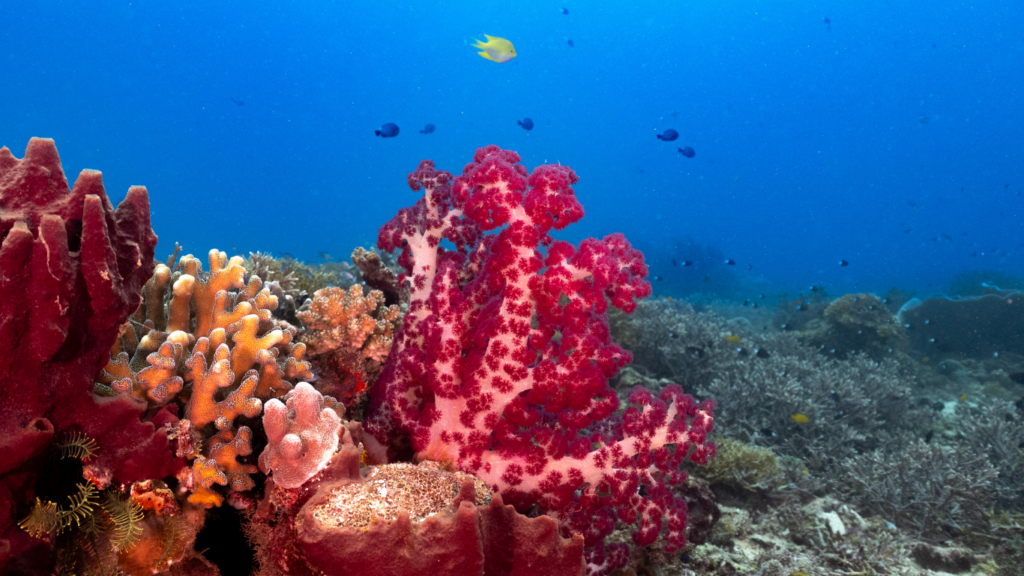
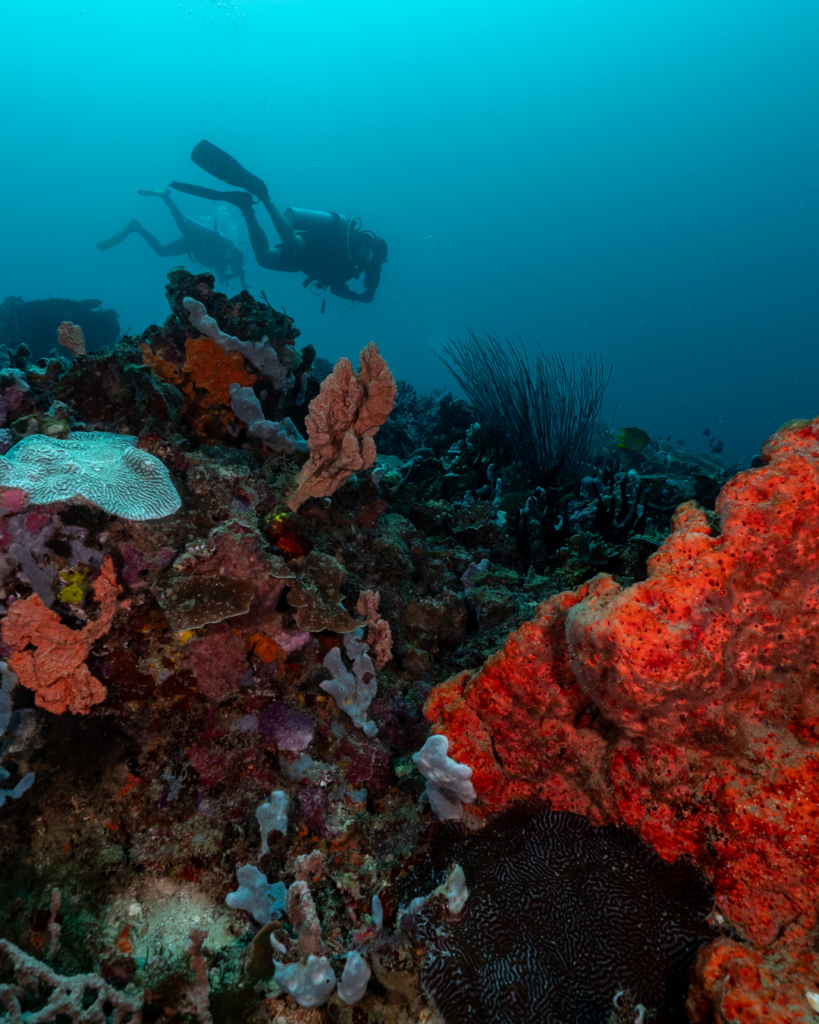
Bright yellow butterflyfish weave through purple soft corals. Electric blue damselfish dart between orange sponges. Pink anemones sway gently while clownfish disappear into their tentacles. Everywhere you look, the reef seems to burst with colour.
It is easy to believe that nature simply enjoys painting the underwater world.
But nothing in the ocean happens by accident.
Every colour you see beneath the surface has a purpose. Some help animals hide, others help them communicate, and many are the result of extraordinary partnerships that have been evolving for millions of years.
Once you understand the story behind coral reef colours, you stop seeing the reef as a beautiful landscape.
You begin to see it as a living conversation.
One of the biggest surprises for many divers is discovering that corals are animals.
Although they often look like colourful rocks or underwater plants, corals are actually tiny animals called polyps. Thousands of these tiny creatures live together, building the reefs that support some of the richest ecosystems on Earth.
So where do all those colours come from?
Part of the answer lies in a remarkable partnership.
Inside the tissues of most reef-building corals live microscopic algae called zooxanthellae. These algae use sunlight to produce energy through photosynthesis, sharing much of that energy with the coral. In return, the coral provides the algae with shelter and the nutrients they need to survive.
It is one of nature’s most successful examples of symbiosis.
The algae also give many corals their golden, brown and green tones, while the corals themselves produce colourful pigments that help protect them from intense sunlight. Together, these two partners create the incredible palette we associate with tropical reefs.
If corals create the stage, reef fish are the performers.
Walk through a city and people communicate with words, expressions and gestures.
On a reef, colour is part of the language.
Some fish use bright colours to attract a mate. Others use bold patterns to warn rivals that a territory is already occupied. Juvenile fish often display different colours from adults, signalling that they are not yet competitors.
Camouflage is just as important.
A fish covered in spots, stripes or patches may look obvious to us, but against a reef full of corals, sponges and shadows, those patterns help it disappear surprisingly well.
Even predators rely on colour. A leopard shark resting on the sandy seabed blends so perfectly with its surroundings that divers can swim straight past without noticing it.
The reef is colourful because every animal has found its own way of surviving.
Have you ever noticed that underwater photos often look bluer than what you remember seeing?
Or perhaps you’ve looked at a bright red object while diving and wondered why it suddenly appeared brown or grey.
The answer has nothing to do with the coral or the fish.
Sunlight is made up of different colours, each with a different wavelength. As light travels through water, those colours are absorbed one by one.
Red is the first to disappear, often within the first few metres. Orange follows, then yellow. As you dive deeper, green begins to fade as well, leaving mostly blue light reaching greater depths.
That is why the ocean often looks blue from the surface.
It is also why underwater photographers use strobes or video lights. By adding white light back onto the reef, they reveal the true colours that are still there but hidden from our eyes.
The colours have never disappeared.
Only the light has.
A colourful reef is not automatically a healthy reef.
Some brightly coloured corals produce fluorescent pigments when they are under environmental stress. Others naturally display vivid colours even in perfect conditions.
However, healthy tropical reefs usually contain an incredible variety of colours because they support a diverse community of corals, fish, algae, sponges and countless other marine organisms.
Diversity creates colour.
And colour often reflects the complexity of the ecosystem.
This is one of the reasons the reefs of the Derawan Archipelago leave such a lasting impression on divers. From the coral gardens around Sangalaki to the walls of Maratua and the reefs surrounding Kakaban, every site offers a different combination of colours, textures and marine life.
No two dives ever look exactly the same.
Perhaps the most powerful reminder of the importance of coral reef colours is what happens when they disappear.
When water temperatures remain unusually high for extended periods, corals become stressed and may expel the microscopic algae living inside them.
Without these algae, the coral loses much of its colour, revealing the white limestone skeleton beneath. This process is known as coral bleaching.
A bleached coral is not necessarily dead.
If conditions improve quickly enough, the algae can return and the coral may recover.
But prolonged stress can make recovery difficult, affecting not only the coral itself but also the countless species that depend on healthy reefs for food and shelter.
This is why protecting coral reefs matters so much. Healthy reefs support marine biodiversity, protect coastlines and provide livelihoods for millions of people around the world.
Many divers spend their first dives searching for turtles, sharks or manta rays.
There is nothing wrong with that.
But after a while, something changes.
You begin to notice the smaller details.
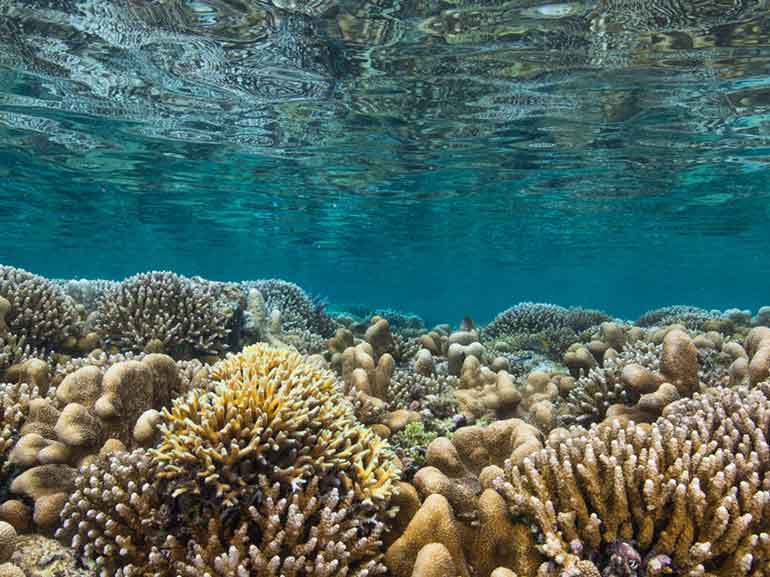
The tiny blue damselfish defending a patch of coral. The fluorescent edge of a giant clam. The way soft corals sway with the current. The unexpected splash of orange on a sponge tucked beneath a ledge.
Suddenly, the reef becomes more than a backdrop for big marine life.
It becomes the attraction itself.
And once that happens, every dive feels richer.
Coral reef colours come from a combination of coral pigments, microscopic algae living inside corals, colourful fish, sponges, algae and many other marine organisms.
Corals are animals. Individual coral polyps build the limestone structures that form coral reefs, while living in partnership with microscopic algae.
Fish use colour for communication, camouflage, attracting mates, defending territory and recognising members of their own species.
Water absorbs different colours of light at different depths. Red disappears first, followed by orange and yellow, leaving mostly blue light at greater depths.
Coral bleaching happens when stressed corals expel the algae living inside them, causing them to lose much of their colour. Bleached corals can recover if conditions improve.
Yes. The reefs around Sangalaki, Kakaban, Maratua and Derawan Island are known for their rich marine biodiversity and vibrant coral ecosystems, making the archipelago one of Indonesia’s most rewarding diving destinations.
The next time you descend onto a reef in the Derawan Archipelago, take a moment before searching for turtles or sharks.
Look at the colours around you.
The yellow butterflyfish disappearing into the coral. The purple soft corals dancing in the current. The giant clam glowing with electric blues and greens.
None of those colours are there by chance.
They are the result of millions of years of evolution, remarkable partnerships and countless strategies for survival.
Once you understand the story behind coral reef colours, you no longer see a beautiful reef.
You see an ecosystem speaking its own language.
And every dive becomes a little more fascinating than the last.
Ask a new diver how they feel about current, and you’ll probably hear the same answer.
“I hope there isn’t too much.”
Ask an experienced diver, and the response is often the opposite.
“I hope there’s some current today.”
At first, that sounds strange. Why would anyone want to swim against moving water? Isn’t calm water supposed to make for an easier, more enjoyable dive?
The answer lies in understanding that the ocean is never really still. Current is not something separate from the reef. It is part of the reef. It carries food, oxygen, nutrients and life itself. Without it, many of the underwater encounters that make the Derawan Archipelago so famous would happen far less often.
The next time you hear a dive guide smile when they mention a little current, you’ll know there is usually a very good reason.
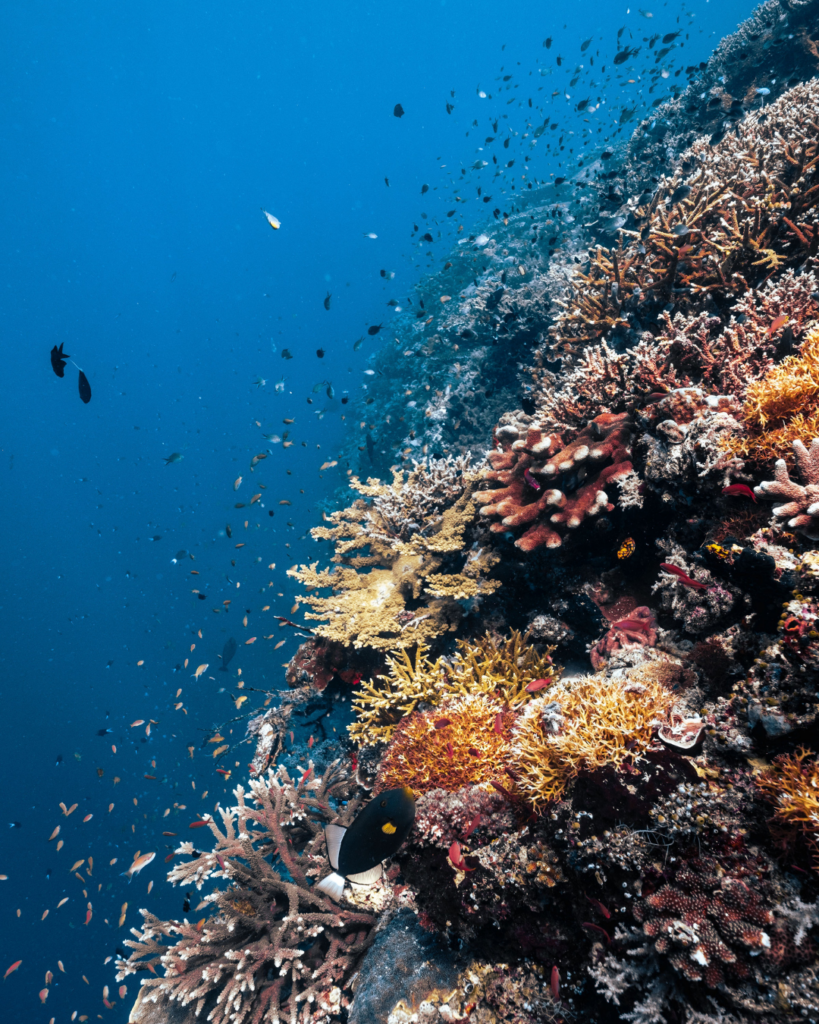
Imagine a forest where nothing ever moved. No wind. No rain. No fresh nutrients arriving from elsewhere.
Eventually, that forest would struggle.
Coral reefs work in a similar way.
Ocean currents transport microscopic plankton, larvae and nutrients across enormous distances. Every time water moves over a reef, it brings food for countless animals, from tiny filter feeders to giant manta rays.
Corals themselves benefit from water movement. Current helps deliver oxygen while carrying away waste products and sediment that could otherwise settle on the reef.
It is one of the reasons healthy reefs are often found where the water is alive with movement.
Marine life has learned to use the ocean almost like we use roads.
Some animals wait where the current is strongest because they know food will come to them instead of the other way around.
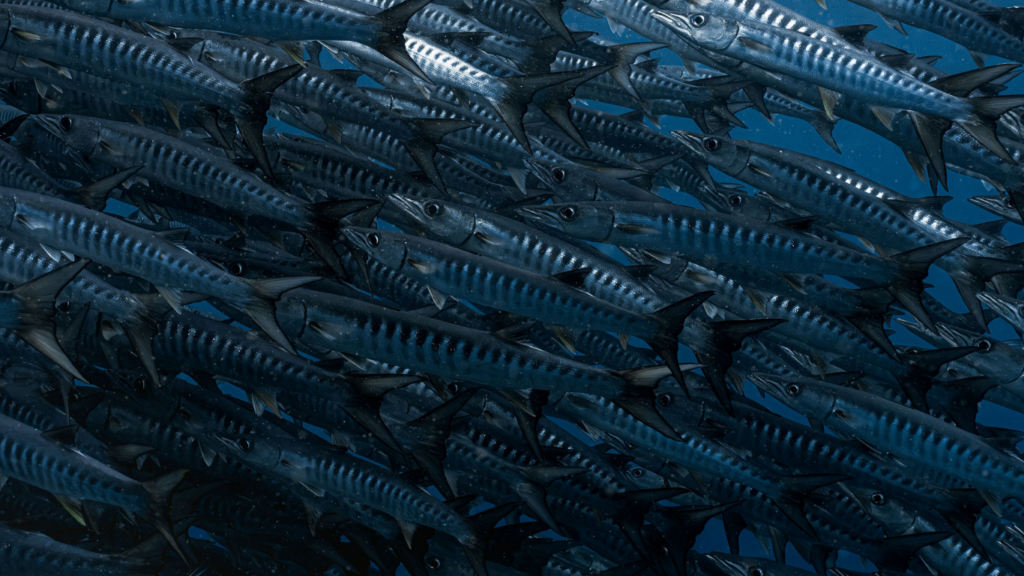
Trevallies patrol the edges of current waiting for an easy meal. Barracudas gather in schools facing into the flow. Reef sharks cruise effortlessly through moving water, using surprisingly little energy while searching for opportunities.
Even manta rays often position themselves where currents concentrate plankton, allowing them to feed more efficiently.
Rather than fighting the ocean, these animals work with it.
It is one of the greatest lessons the sea can teach.
One of the reasons the Derawan Archipelago has earned its reputation among experienced divers is that the islands sit within a dynamic marine environment.
Sites around Sangalaki, Kakaban and Maratua are influenced by tides and currents that change throughout the day. Some dives begin gently before building into stronger movement. Others remain calm from start to finish.
These changing conditions create incredible diversity. A reef that feels quiet in the morning may become full of life a few hours later simply because the tide has changed.
That is why local dive guides pay so much attention to tide tables, moon phases and current predictions. Knowing when to enter the water is often just as important as knowing where.
One of the biggest misconceptions in diving is that current automatically means a difficult or exhausting dive.
In reality, many dives involve drifting gently with the water rather than swimming against it.
Good planning makes all the difference. Experienced guides choose entry points, routes and timings that allow divers to enjoy the movement safely while letting the current do much of the work.
Of course, some sites are more demanding than others, and conditions should always match a diver’s experience level. But current itself is not the enemy. Understanding it is part of becoming a better diver.
Divers often spend their first few dives looking for individual animals.
After enough time underwater, something changes.
You start looking at the water itself.
You notice the way soft corals lean in one direction. You see schools of fish holding their position effortlessly. You watch tiny particles drifting past your mask and realise they are telling you where the ocean is moving.
Eventually, you stop asking, “Where are the fish?”
Instead, you ask, “Where is the current?”
The answer is often the same.
Yes, when dives are planned according to the conditions and your level of experience. Good briefings and experienced guides make all the difference.
Swimming into the current helps sharks detect scents, locate prey and conserve energy while waiting for food to come to them.
Current concentrates plankton, making feeding more efficient for manta rays.
No. Conditions vary between islands, dive sites, tides and weather. Some dives are calm, while others experience stronger water movement.
Not necessarily. Many gentle drift dives are suitable for newer divers, while stronger currents are better left until you have more experience.
They combine tide tables, local knowledge, weather conditions and years of experience diving the same sites.
Current is often misunderstood.
Many divers see moving water as something to overcome, when in reality it is one of the reasons reefs are so vibrant in the first place.
The next time you enter the water in the Derawan Archipelago, take a moment to look beyond the coral and the fish. Watch the tiny particles drifting past, notice the way marine life positions itself, and pay attention to the invisible force connecting everything around you.
Because the ocean is always moving.
And where the water moves, life usually follows.
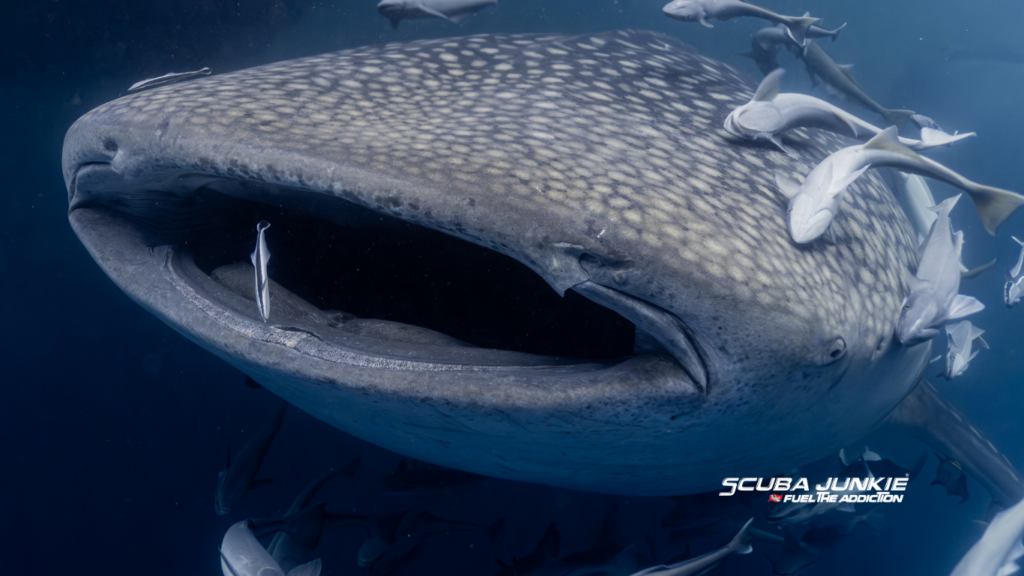
Imagine you are floating in the water, face-to-face with the largest fish on Earth.
A whale shark glides slowly beneath you. Its enormous mouth opens as it filters water, completely uninterested in your presence. Your eyes follow the pattern of white spots along its back, and for a moment, it feels like the only thing in the ocean.
Then you notice something else.
Small fish tucked underneath its belly. A few near its gills. Others attached along its sides. Sometimes they are tiny. Sometimes they are surprisingly large. They seem completely at home, as if they belong there.
And in a way, they do.
The story of whale shark remora symbiosis is one of the most fascinating partnerships in the ocean. It is a relationship built on cooperation, opportunity, and millions of years of evolution. And once you understand it, you will never look at a whale shark the same way again.
To understand the relationship, we first need to meet the remora.
Remoras are a family of fish famous for one unusual feature. On top of their heads sits a modified dorsal fin that has evolved into a suction disc. This natural adaptation allows them to attach themselves to larger animals.
At first glance, it can look like they are stuck to the whale shark. In reality, they can attach and detach whenever they want. Think of it as a living suction cup designed by nature.
For a remora, finding a whale shark is a little like finding a moving house.
It provides transportation, protection, and access to food, all without the remora needing to spend much energy.
Not a bad deal for a fish.
The word “symbiosis” often sounds more complicated than it really is.
In simple terms, symbiosis is a close relationship between two different species.
Some symbiotic relationships benefit only one animal. Others benefit both. Some can even be harmful to one partner.
The whale shark remora symbiosis is generally considered a form of mutualism or commensalism, depending on the situation. Scientists continue to study the relationship, but the important point is that neither animal appears to suffer from it.
Instead, both seem to gain something from the arrangement.
Like many good roommates, they make life easier for one another.
A whale shark spends much of its life moving through the ocean in search of plankton and other tiny food sources.
For a remora, following a whale shark offers several advantages.
The most obvious is transportation.
Rather than swimming long distances on its own, the remora can travel efficiently by attaching itself to the whale shark. This allows it to conserve energy while exploring vast stretches of ocean.
Food is another benefit.
As a whale shark feeds, small scraps and particles drift away. Remoras take advantage of these opportunities, feeding on leftovers that would otherwise be lost.
The whale shark, meanwhile, gains something too.
Remoras are known to consume parasites, dead skin, and unwanted organisms from their hosts. While a whale shark could certainly survive without remoras, having a few diligent cleaners around is unlikely to be a disadvantage.
The result is one of the ocean’s most successful partnerships.
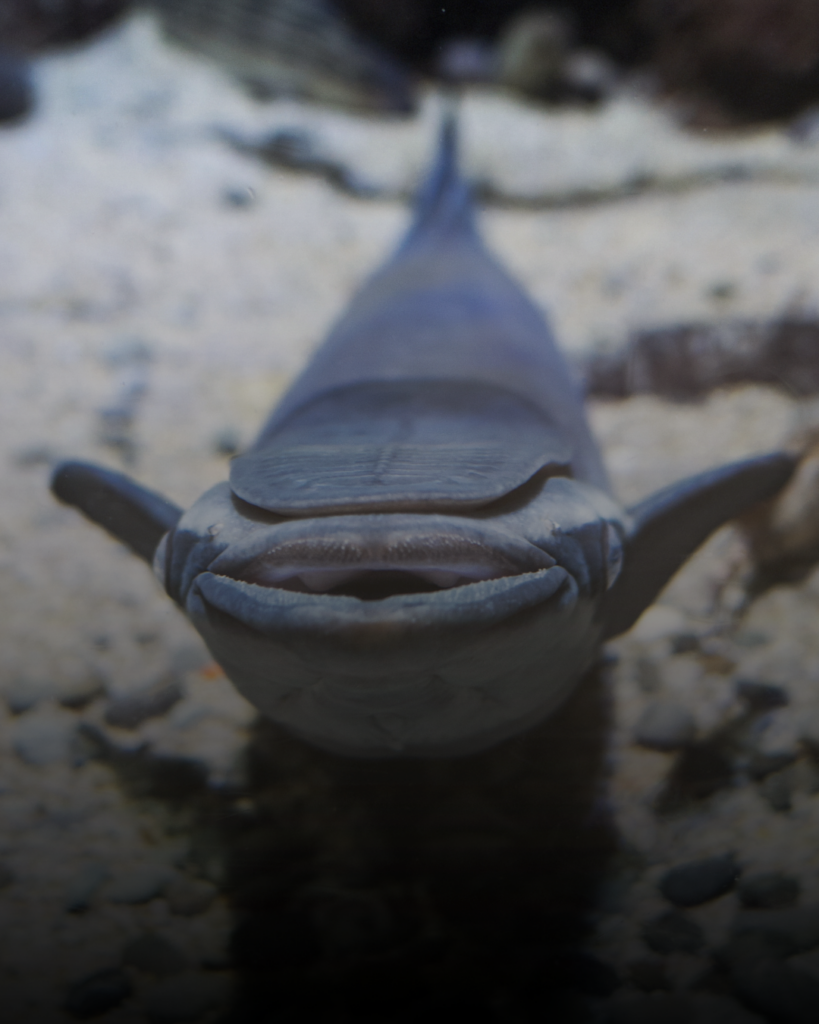
One of the most remarkable aspects of whale shark remora symbiosis is the remora’s ability to stay attached while the whale shark swims.
The suction disc on top of the remora’s head contains a series of movable plates. When pressed against a surface, these plates create a strong grip.
This allows the remora to remain attached even when the whale shark changes direction or increases speed.
Despite this impressive attachment system, remoras are not permanent passengers. They move around frequently, switching positions and sometimes leaving one host to find another.
It is less like being glued to a whale shark and more like choosing the best seat on a very large bus.
Although whale sharks are among the most famous hosts, remoras are not particularly picky.
They can be found attached to:
Some have even been observed attaching themselves to boats.
For a remora, the goal is simple. Find something large, safe, and constantly moving through food-rich waters.
Whale sharks happen to be particularly attractive options.
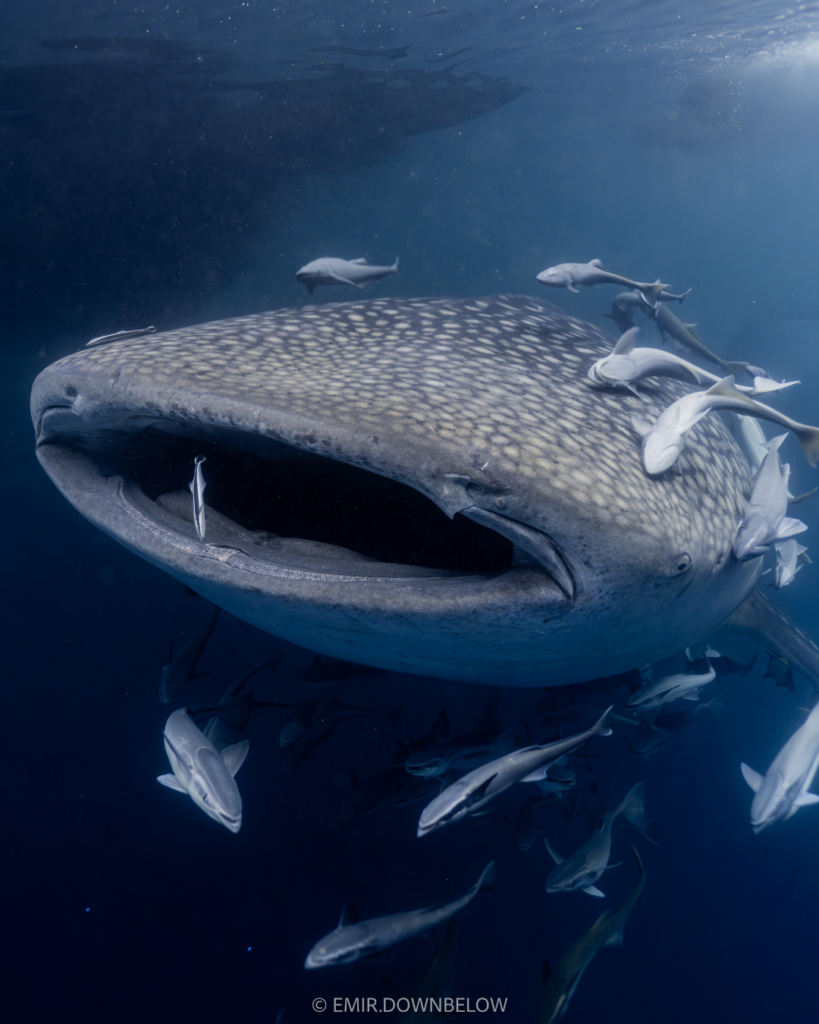
One of the reasons whale shark encounters in the Derawan Archipelago are so memorable is that they allow you to observe more than just the whale shark itself.
Many guests join the whale shark trips hoping to see the giant fish, and understandably so. But those who take a moment to slow down often notice the details.
Look beneath the whale shark. Around its gills. Along its sides.
You may spot several remoras travelling alongside their enormous host.
Suddenly, what seemed like a single animal becomes an entire story unfolding in front of you.
The whale shark is not travelling alone.
The longer divers spend underwater, the more they realise that nothing exists in isolation.
Cleaner wrasse depend on larger fish. Coral depends on algae. Reef predators depend on healthy fish populations.
The whale shark remora symbiosis is another reminder that the ocean is built on connections.
Every animal plays a role.
Even one of the largest creatures on Earth shares its journey with a fish small enough to fit in your hand.
That contrast is part of what makes the relationship so fascinating.
Current observations suggest that remoras do not significantly harm whale sharks. In many cases, they may even help by removing parasites and dead skin.
No. Parasites benefit at the expense of their host. Remoras generally do not cause harm and may provide benefits, making the relationship different from parasitism.
They gain transportation, protection, and access to food while conserving energy.
Yes. Remoras can attach to many different marine animals and can swim freely when needed.
No evidence suggests that whale sharks actively prey on remoras. The two species coexist peacefully.
Absolutely. In fact, noticing the remoras is one of the easiest ways to appreciate the complexity of the encounter beyond simply seeing the whale shark itself.
The next time you find yourself swimming alongside a whale shark, try looking beyond the giant.
Notice the smaller fish travelling beneath it. Watch how effortlessly they move from one position to another. Think about the journey they are sharing.
The whale shark may be the star of the show, but the story of whale shark remora symbiosis reminds us that some of nature’s most fascinating relationships happen quietly in the background.
And once you start noticing them, the ocean becomes a much richer place.
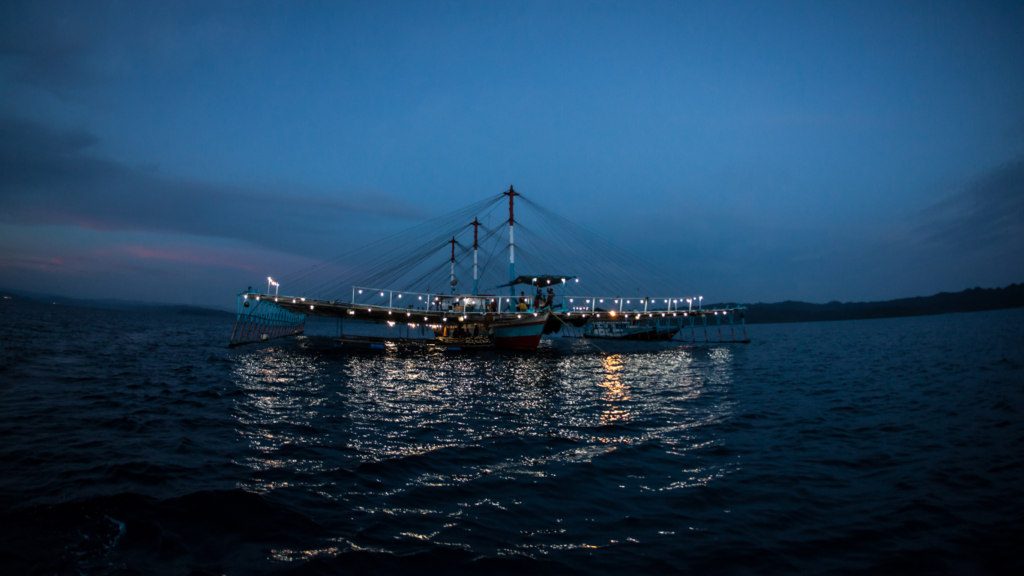
Long before divers arrived in the Derawan Archipelago searching for mantas, turtles, or whale sharks, tiny lights were already appearing on the horizon after sunset.
From the shore, they almost looked like floating villages.
A few dim lamps in the middle of the sea. Wooden structures standing quietly in the dark. Men preparing coffee. Someone cooking dinner. Hammocks swaying in the evening breeze.
These are the bagans.
And for generations, they have been part of life in Indonesia.
Most visitors first notice them at sunrise, when their silhouettes slowly emerge from the morning mist. Others encounter them while heading out for a whale shark trip. But few realise that these simple wooden platforms have stories that go back long before tourism ever arrived in Derawan.
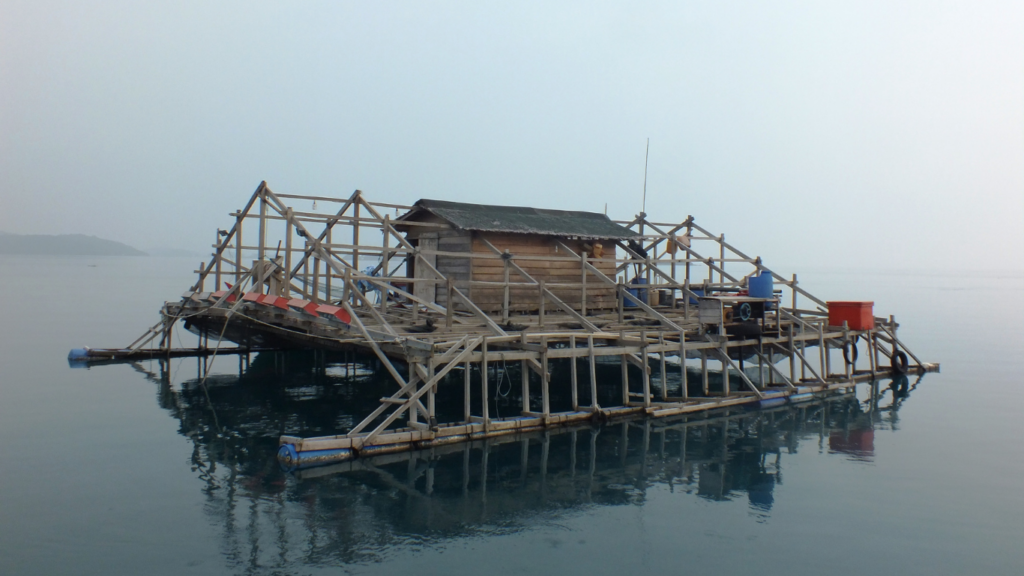
The word “bagan” refers to a traditional Indonesian lift-net fishing platform. Originally introduced by Bugis and Makassarese fishermen from Sulawesi in the mid-20th century, these floating structures were designed to catch squid and small pelagic species using lights and large nets suspended beneath the platform.
Some bagans remain anchored in one place for months. Others move depending on the season and fishing conditions.
But no matter their location, they are much more than fishing tools.
Step onto a bagan and you’ll find small kitchens, sleeping areas, simple tables, and enough supplies for fishermen to spend days or even weeks at sea. Life moves slowly out here. Meals are shared, stories are exchanged, and the ocean provides both a livelihood and a rhythm.
To many fishermen, the bagan is simply where life happens.
As the sun disappears below the horizon, something magical begins.
Lights come on.
Bright lamps shine over the water, attracting plankton, squid, and small fish. Throughout the night, more and more marine life gathers beneath the platform. Hidden below, large square nets wait patiently.
At the right moment, the fishermen raise the nets and collect the catch.
Fishing on dark nights has traditionally been the most productive. Around the new moon, when natural light is limited, the artificial lights become even more effective. That is why bagans are often busiest during these periods.
While most people are asleep, life on the bagans is only just beginning.
Like many things in the ocean, bagans are not fixed forever. They move with the weather and with the seasons.
During most of the year, roughly from September until June, many of the platforms operate relatively close to Derawan Island. At these times, reaching them is often just a short boat ride away.
When the southern winds arrive, usually from mid-June until around mid-September, conditions become rougher around Derawan. To find calmer waters, many fishermen move their bagans towards the sheltered area of Talisayan, closer to the mainland of East Kalimantan.
Life on the platforms continues much as it always has, only in a different location. And with them, the rhythm of the sea changes too.
For visitors, this means that whale shark trips during these months involve a much longer journey, often around two hours each way. It also means that some days are simply too rough to go at all. The ocean, as always, decides the schedule.
Spend enough time around the bagans, and you begin to realise that fishing is only part of the story.
Life out here is simple.
Morning starts with coffee. Conversations happen slowly. Meals are cooked on tiny stoves. Between lifting nets and checking lines, there are long periods of waiting.
Sunsets become routine. So do sunrises.
There are no traffic jams. No schedules filled with meetings. Only the weather, the moon, and the sea.
It is a lifestyle that demands patience.
And perhaps that is why the people who work on these platforms seem so comfortable with uncertainty. The ocean has always operated on its own timetable.
For many communities around the Derawan Archipelago, bagans represent generations of knowledge passed from father to son. Understanding currents, reading the weather, and knowing the influence of the moon have always been part of life at sea. Long before modern weather forecasts and GPS, fishermen relied on experience and patience, learning to work with the ocean rather than against it.
These floating platforms are part of a tradition that has adapted over time while remaining deeply connected to the sea. They remind us that life in the archipelago has always depended on understanding the ocean rather than trying to control it.
The bagans are not monuments.
They are living history.
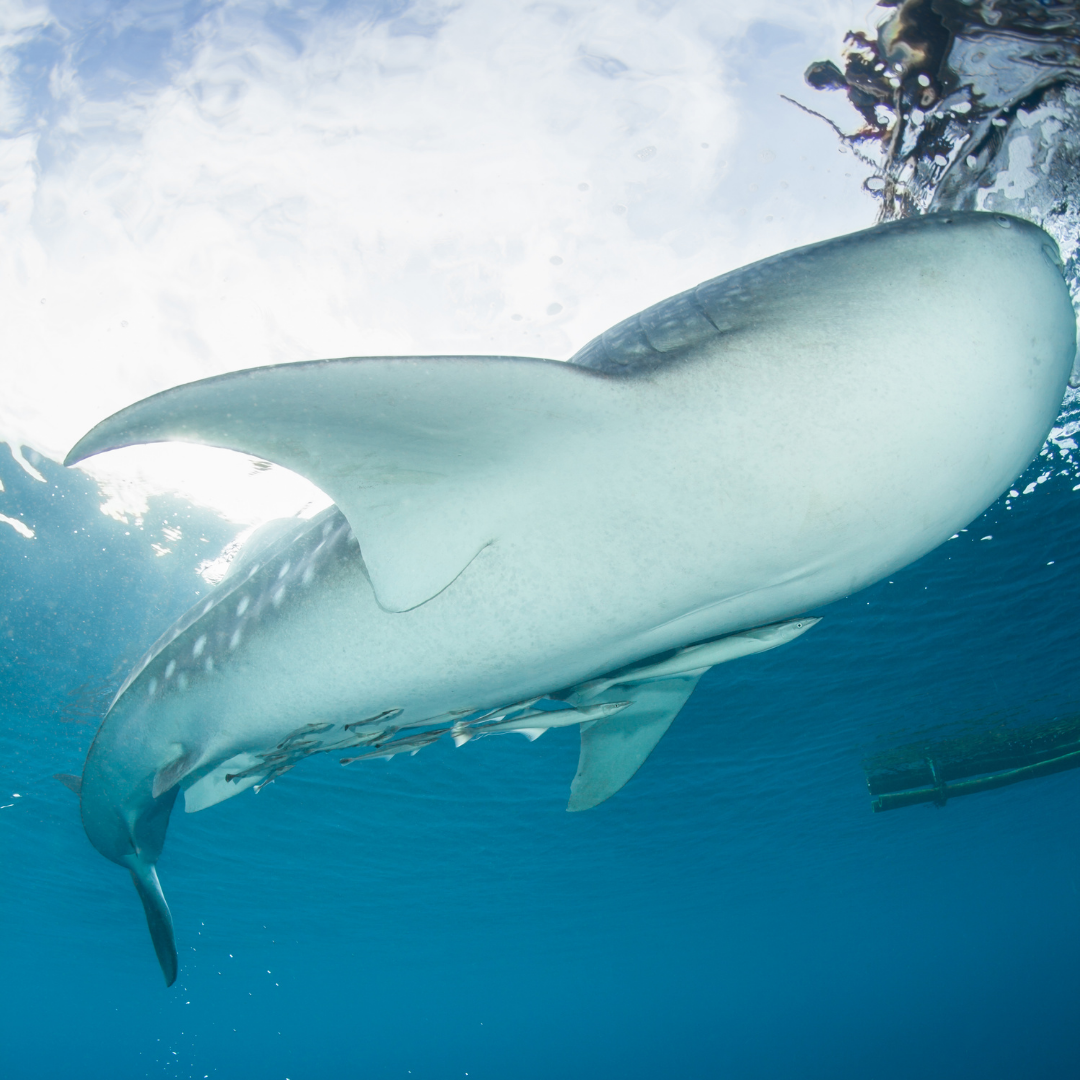
People often associate bagans with whale sharks, but the relationship is only one small part of a much bigger story.
The lights attract squid and small fish, creating feeding opportunities that whale sharks sometimes take advantage of. If a whale shark is already present and fishermen have excess catch, some may throw leftovers back into the water. Sometimes even splashing water is enough to keep the curious giants interested for a little longer.
Current observations suggest these interactions do not alter the whale sharks’ natural migration patterns, and after a quick snack they continue their journeys through the archipelago and beyond.
For the fishermen, whale sharks are occasional visitors. For the whale sharks, the bagans are simply one of many places where food can sometimes be found.
Fishing remains the primary purpose of these platforms, but tourism has created new opportunities as well.
Local captains and fishermen have become guides, sharing their knowledge with visitors who wish to experience the ocean through local eyes. At Scuba Junkie Sangalaki, whale shark excursions are organised directly through the local community. The trips are not operated by the resort, and all payments go directly to local captains and guides.
This connection between tourism and traditional livelihoods helps create additional sources of income while keeping the community involved in protecting the marine environment. Conservation works best when local people benefit from it too.
A bagan is a traditional Indonesian lift-net fishing platform used primarily for catching squid and small fish at night using lights.
Depending on the season and location, fishermen may spend days or even weeks living on the platforms.
The lights attract plankton, squid, and small fish, which gather beneath the platform and are caught using large nets.
Dark nights make the lights more effective, which usually improves fishing conditions.
No. Whale sharks are wild animals and their presence is never guaranteed.
Yes. Many visitors experience the bagans during whale shark trips organised by local captains.
If you ever leave Derawan before sunrise, take a moment to look towards the horizon.
Those lights are not resorts.
They are not ships.
They are bagans.
Small worlds floating quietly in the sea, where generations of fishermen have lived by the rhythm of the ocean.
Long after the tourists have returned home, the lights will come on again. Coffee will be brewing, nets will be lowered, and stories will be shared. Because for the people who live and work on them, the bagans are not attractions.
They are simply life.
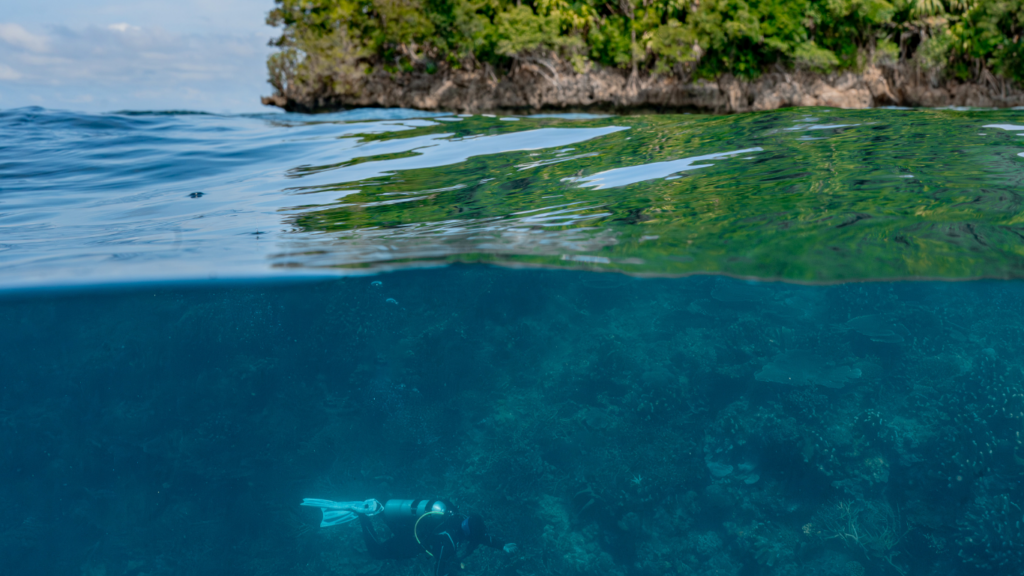
Let this World Oceans Day remind us that the ocean is not separate from us but has always flowed through us, in everything we do and consume. Discover how small daily actions, responsible diving, and marine conservation efforts by the Scuba Junkie family help protect our blue planet.
The first time many of us truly understand the ocean is not from a documentary or a photograph. It happens quietly. Sometimes underwater, where the sound of the world disappears and all we hear is our own breathing. Sometimes standing barefoot on a beach at sunrise, watching waves arrive from places we will never see.
And sometimes, it happens when we lock eyes with a sea turtle gliding through coral reefs older than human history itself.
That moment changes people.
This is why World Oceans Day matters so deeply to us at Scuba Junkie. Not because it is just another date on the calendar, but because it reminds us that the ocean is not somewhere far away. It is part of every breath we take, every meal we eat, every climate system that keeps our planet alive.
The ocean gives us life long before we ever step into it.
Yet today, it needs our active actions to protect it more than ever. So, let’s reimagine our relationship to the ocean.
We often speak about “saving the ocean” as though it were separate from humanity. But the truth is simpler and more uncomfortable than that. If the ocean suffers, we suffer too.
The ocean is one of Earth’s greatest oxygen producers and the foundation of our planetary life support system. It regulates our climate, feeds over 3 billion people, supports livelihoods, and protects biodiversity on a scale we are only beginning to understand.
And still, every year, millions of tonnes of plastic enter marine ecosystems. Coral reefs are bleaching under rising temperatures. Sea turtles mistake floating plastic bags for jellyfish. Ghost nets continue drifting silently through the sea, trapping marine life long after they were abandoned.
For many people, these problems feel distant. Easy to ignore.
That is part of the challenge.
We rarely protect what we do not feel connected to.
At Scuba Junkie, we have seen this transformation happen thousands of times. Someone arrives simply wanting a holiday or a dive certification. Then they descend beneath the surface for the first time and suddenly the ocean becomes personal.
A turtle is no longer just “marine life.”
A reef is no longer just “nature.”
The ocean becomes a living world they care about deeply.
And once people care, they begin to protect.
It is easy to feel overwhelmed when talking about protecting and preserving the ocean. Climate change, pollution, overfishing, habitat destruction… the list can feel endless.
But not all hope is lost.
In fact, one of the most beautiful things we witness every day is the incredible resilience of the ocean when people choose to care for it.
Across the Scuba Junkie family, conservation is not treated as a side project. It is part of daily life — from the small details, like providing guests with locally sourced eco-friendly toiletries across all our operations to weekly beach and underwater cleanups to the larger programs that define how we dive, travel, educate, and operate.
Through Scuba Junkie SEAS, our conservation arm founded in 2009, marine conservation has become deeply woven into everything we do. In Mabul, sea turtle nests are protected through hatchery programs that have already helped release more than 17,000 hatchlings back into the ocean. In collaboration with the Sabah Wildlife Department, injured turtles have been rehabilitated and returned to the wild through the Mabul Turtle Rehabilitation Centre.
Coral restoration projects, marine debris initiatives, shark conservation efforts, and educational outreach efforts all work toward the same idea:
Protecting the ocean starts with people.
Not perfect people.
Not scientists only.
Just people willing to care.
This is an important conversation, and one we believe should be honest.
Yes, diving can damage reefs — if done irresponsibly. Poor buoyancy, touching marine life, littering, or overcrowding fragile ecosystems can all have negative impacts.
But when done responsibly, diving and other marine activities can also become one of conservation’s strongest allies.
At Scuba Junkie, responsible dive practices are central to how we operate. Environmental briefings, following the Green Fins code of conduct, reef-safe behaviors, and conservation education are integrated into the diving experience because we believe tourism should protect the places it depends on.
And perhaps even more importantly, diving creates emotional connection.
Someone who has watched a shark glide through blue water is far more likely to support shark conservation. Someone who has seen coral bleaching with their own eyes understands climate change differently. Someone who has floated beside a turtle often leaves carrying a sense of responsibility that lasts years beyond the trip itself.
The ocean stops being abstract.
It becomes real.
One of the biggest misconceptions about marine conservation is believing only coastal communities or divers can make a difference. But the ocean connects all of us and our actions.
The plastic bottle thrown away inland can still reach the sea through rivers and drainage systems. The seafood choices we make influence the fishing industry. The products we buy, the waste we create, the businesses we support — all of these decisions ripple outward and can make a real difference.
Being an ocean ambassador does not require living close to the ocean. It begins with awareness. Sometimes the smallest actions matter more than we realize:
Using reusable bottles and bags to reduce unnecessary plastic consumption.
Supporting sustainable tourism operators such as Green Fins Members.
Learning and sharing about marine ecosystems.
Using non-toxic, reef-safe sunscreens.
Use local and public transportation when possible.
Supporting conservation organizations in-person or financially.
Sharing educational content instead of ignoring it.
Voting for candidates that prioritize climate action.
Even conversations matter. Because awareness spreads. And when enough people care, that’s when systems begin to change.
The truth is that conservation is rarely about one dramatic action. It is usually thousands of small consistent efforts carried out by ordinary people.
At Scuba Junkie, we have watched travelers join reef and beach cleanups during their holidays and leave transformed by the experience. We have seen local communities become deeply involved in turtle protection initiatives. We have watched children release hatchlings into the sea and understand, perhaps for the first time, that nature’s future depends on them.
For those who have the time and would like to be more hands-on, participating in reef and beach cleanups, marine life monitoring, or marine conservation workshops can make a direct difference.
For those who are limited on time and resources, your support can still be powerful. Scuba Junkie SEAS runs programs such as turtle adoption initiatives connected to the hatchery and rehabilitation work in Mabul. Supporting these projects helps fund nest protection, rehabilitation efforts, monitoring, education, and conservation outreach. Many vital marine conservation organisations remain underfunded, any support you can offer makes a difference.
Sometimes helping the ocean means getting in the water.
Sometimes it means using your voice or wallet.
Both matter.
There is a tendency in environmental conversations to focus only on loss. But the ocean is still full of life worth fighting for.
While individual actions matter deeply, we can’t ignore that the future of the ocean also depends on larger decisions being made at government and industry levels. Marine protected areas, stronger regulations against pollution, sustainable fishing policies, and meaningful climate action all play a critical role in protecting marine ecosystems for future generations.
Sometimes helping the ocean means carrying a reusable bottle or joining a beach cleanup. Sometimes it means signing petitions, supporting environmental organizations, voting for leaders who prioritize conservation, or using our voices to demand stronger protection for our seas.
Real change happens when personal responsibility and collective action work together — whether that means carrying a reusable bottle, signing a petition, or voting for leaders who prioritize our seas.
And despite the challenges, hope is not lost.
There are still healthy reefs bursting with color.
There are still turtles returning to the nest.
There are still communities choosing conservation over exploitation.
There are still people willing to dedicate their lives to protecting marine ecosystems.
World Oceans Day is celebrated every year on June 8th to raise awareness about the importance of the ocean and encourage global action to protect marine ecosystems.
The ocean is one of Earth’s greatest oxygen producers, regulates the climate, supports biodiversity, provides food, and sustains billions of livelihoods worldwide.
Conservation is embedded into everything we do at Scuba Junkie. As a Green Fins Member, we follow a strict code of conduct to minimize our environmental impact across all operations. Through Scuba Junkie SEAS, our dedicated conservation arm, this commitment extends further into turtle conservation, coral restoration, marine debris cleanups, shark conservation, and community outreach programs.
Yes. Responsible diving practices such as good buoyancy control, avoiding contact with marine life, using reef-safe products, and supporting eco-conscious operators can minimize environmental impact and promote conservation awareness.
Reducing plastic use, supporting conservation projects, making sustainable purchasing choices, spreading awareness, and donating to marine conservation initiatives can all help protect the ocean from anywhere in the world.
The turtle adoption initiatives supported by Scuba Junkie SEAS help fund sea turtle conservation efforts including hatchery protection, rehabilitation, monitoring, and conservation education programs in Mabul.
The ocean does not ask for perfection from us.
Only respect.
Every refillable bottle, every cleanup, every conversation, every responsible dive, every protected reef, every rescued turtle — it all matters.
And perhaps the most powerful thing we can do is inspire others to care too.
Because the moment people fall in love with the
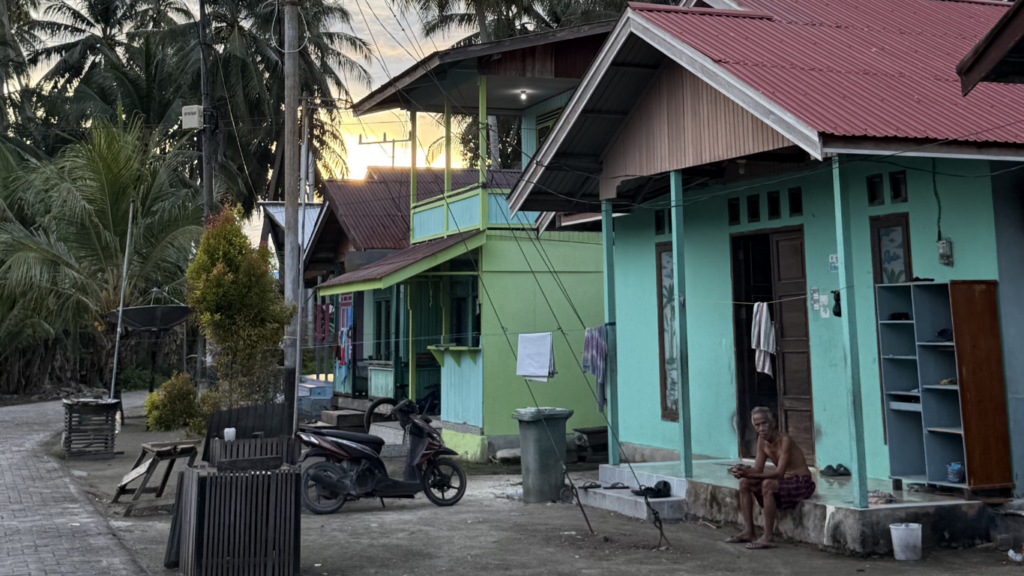
The first few days in Derawan are usually about the obvious things.
The boat rides. The reefs. The turtles. The excitement of finally arriving after such a long journey.
But after a while, something changes.
The bigger moments stop demanding all your attention, and you begin noticing smaller things instead. Quiet things. The kind of details that would probably sound unimportant anywhere else, but somehow become part of the experience here.
That is often when life in Derawan starts feeling real.
Most guests arrive with busy minds.
Flights, connections, transfers, packing lists, camera gear, dive plans. The journey to the Derawan Archipelago takes time, and most people arrive carrying a bit of mental noise with them.
Then gradually, the island starts slowing things down.
Morning coffee lasts longer. Surface intervals become conversations instead of phone scrolling. People stop checking the time constantly. Nobody seems to be rushing anywhere.
It is not something you notice immediately. It happens quietly over several days.
And eventually, you realise your brain feels quieter too.
During the first days, guests get excited every time they see a turtle.
And honestly, that excitement never fully disappears.
But after spending time around Derawan, turtles slowly become part of the background rhythm of the island. You see them while walking to breakfast. You spot them from the jetty during surface intervals. Sometimes they are directly underneath the water bungalows, calmly feeding on seagrass as if nobody is watching.
And they are big.
The strange thing is not only how many turtles there are, but how relaxed they seem. They move slowly, surface casually beside boats, and continue feeding even when people stop to watch them.
At some point, guests stop calling everyone over every time a turtle appears.
Not because it is less special, but because it has quietly become normal.
One of the first things many people notice about life in Derawan is that the island always has sound.
Wooden walkways creak softly at night. Small boats pass in the distance. Waves move underneath the bungalows. Early mornings begin slowly while the ocean is already awake.
At first, some guests find these sounds unusual. Then, after a few nights, they become strangely comforting.
People who live near cities often forget what natural silence actually sounds like. Derawan is not silent in the traditional sense. It is alive. The island has rhythm, movement, and small noises that become familiar surprisingly quickly.
In many dive destinations, everything revolves around getting underwater as quickly as possible.
But after a few days in Derawan, surface intervals start becoming part of the experience rather than just breaks between dives.
Coffee tastes better after a morning dive. Conversations become slower and longer. Divers compare sightings, laugh about failed fish photos, and quietly watch the water while waiting for the next briefing.
Sometimes the best moments happen between dives rather than during them.
That slower rhythm is part of what makes staying at Scuba Junkie Sangalaki feel different from larger, busier dive destinations.
The longer divers stay in Derawan, the less they chase big sightings.
During the first dives, everyone wants mantas, sharks, whale sharks, or turtles. And often they get them.
But after a while, people start noticing:
The ocean becomes less about highlights and more about observation.
That shift changes the entire diving experience.
One of the unexpected things about life in Derawan is how quickly simple routines start feeling comfortable.
Wake up. Dive. Eat. Rest. Repeat.
There is something satisfying about days becoming uncomplicated. No traffic. No schedules packed into every hour. No need to constantly decide what to do next.
The island slowly removes unnecessary noise from daily life.
And for many guests, that feeling becomes just as memorable as the diving itself.
Guests who stay only a few days usually remember the highlights.
Guests who stay longer often remember the atmosphere.
The light in the late afternoon. The sounds under the bungalow at night. The routine of morning coffee before diving. The feeling of slowly adapting to island life instead of simply visiting it.
This is often why experienced divers return to places like Derawan. Not only because of what they see underwater, but because of how the place makes them feel after enough time has passed.
Some destinations impress you immediately.
Others reveal themselves slowly.
Life in Derawan belongs to the second category. The longer you stay, the more the small details begin to matter. The turtles beneath the jetty. The calm pace of the island. The quiet conversations during surface intervals. The feeling of waking up surrounded by ocean every day.
None of these things sound dramatic on paper.
But together, they are often what people remember most.