We provide daily dive trips and dive courses around the Sangalaki Marine Park.
Looking for tips and tricks about diving, marine life or what to do in Borneo? Follow us on our blog for weekly updates from the team!






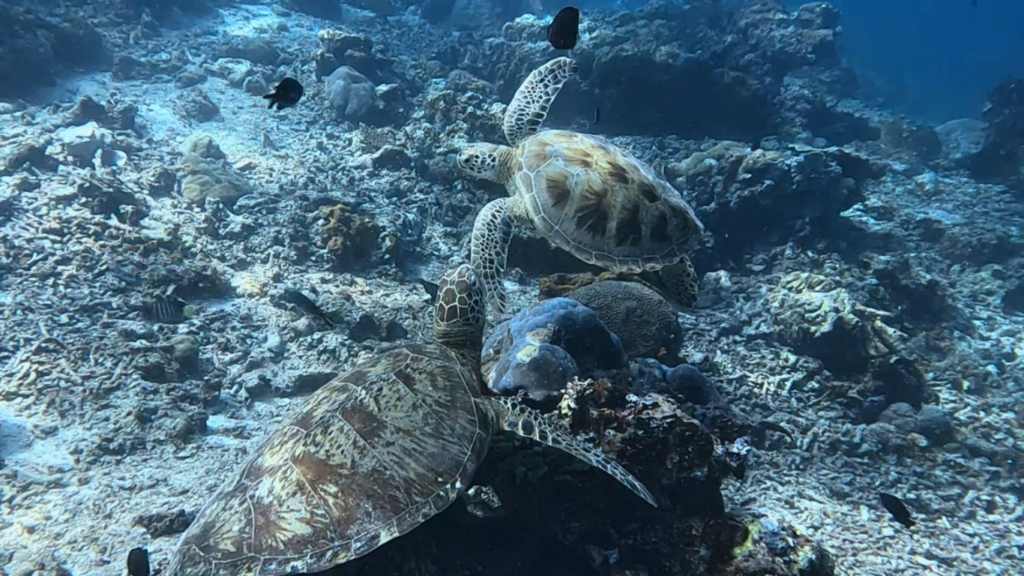
In many dive destinations, seeing a turtle is a highlight. Something you hope for, look out for, and maybe count proudly at the end of the dive.
With turtles in the Derawan Archipelago, that mindset doesn’t last very long.
Here, turtles are not an occasional reward. They are part of daily underwater life. After a few days of diving, most guests realise they’ve stopped counting turtles altogether—not because they’ve lost interest, but because turtles have become normal. And in today’s oceans, that kind of normality is rare and worth protecting.
The first dives are usually full of excitement. One turtle cruising past. Another resting on the reef. A third gliding up for air.
But diving among turtles in the Derawan Archipelago shifts your focus. Instead of counting sightings, you start observing behaviour. You notice how calm they are, how little effort they use to move, and how comfortable they seem sharing space with divers.
This change doesn’t happen everywhere—and it tells you something important about the ecosystem.
Within the Derawan Archipelago, one island consistently stands out when it comes to turtle encounters: Maratua Island.
On the right dive, at the right site, seeing dozens of turtles on a single dive is possible. Divers often surface laughing, trying—and failing—to remember how many turtles passed by. At some sites, numbers can reach levels where counting simply becomes pointless.
This is where the phrase “you’ll stop counting” truly becomes reality.
While Maratua may offer the highest concentration, turtles in the Derawan Archipelago are found across all islands.
You’ll see them:
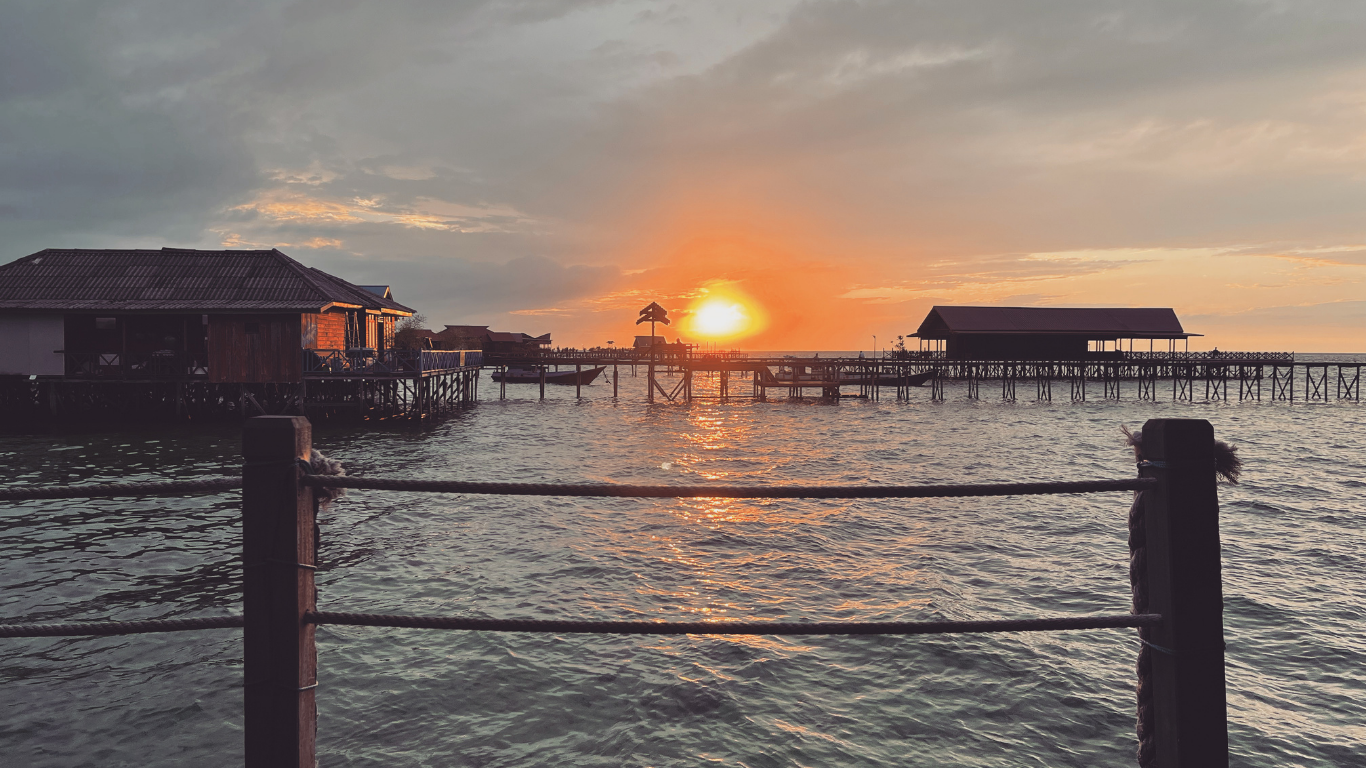
And very often, right underneath the water bungalows.
Between dives, turtles are frequently spotted grazing on seagrass below the jetty or surfacing quietly next to the bungalows. They are big, relaxed, and clearly at home. Watching them go about their day without urgency is one of the understated pleasures of staying in Derawan.
Turtles don’t remain relaxed in places where they are constantly disturbed.
One reason encounters with turtles in the Derawan Archipelago feel so unrushed is because these animals are not pressured. They are not chased, touched, or surrounded. Over time, this lack of stress shapes behaviour.
Divers often notice:
For experienced divers, these details are often more meaningful than dramatic encounters.
When turtles are rare, they become something to chase.
When turtles are abundant, they become something to learn from.
Diving with turtles in the Derawan Archipelago encourages a slower pace. Divers drift instead of pursue. Observation replaces interaction. The reef becomes a place to settle into rather than rush through.
This is the kind of diving that rewards patience—and it tends to stay with people long after the trip ends.
Here’s where the picture comes together.
Some of the most turtle-rich sites—particularly around Maratua—are accessed when guests commit to longer dive stays. This isn’t about exclusivity; it’s about distance, logistics, and making the journey worthwhile.
Guests who stay longer:
For many, extending their stay transforms turtles from a bucket-list item into a familiar presence.
Many guests arrive hoping to see a turtle.
By the end of their stay, especially after multiple days diving among turtles in the Derawan Archipelago, that hope quietly shifts. Turtles become part of the background—something you notice between dives, beneath your bungalow, or during surface intervals.
At some point, you realise you never asked how many you saw that day.
You didn’t need to.
Stopping the count doesn’t mean taking turtles for granted. It means recognising how unusual it is for abundance to feel ordinary.
In the Derawan Archipelago, turtles aren’t performing for visitors. They’re simply living their lives. Being able to witness that—day after day—is a privilege that only exists where ecosystems are still functioning well.
If staying a little longer gives you the chance to experience that rhythm fully, it might just be worth it.
Some destinations reward patience.
Diving with turtles in the Derawan Archipelago is one of them.