We provide daily dive trips and dive courses around the Sangalaki Marine Park.
Looking for tips and tricks about diving, marine life or what to do in Borneo? Follow us on our blog for weekly updates from the team!





At first glance, the idea sounds almost impossible. A lake in the middle of the ocean, filled with jellyfish that do not sting.
Yet that is exactly what you will find at Kakaban Jellyfish Lake, located in the Derawan Archipelago.
This unusual ecosystem has fascinated scientists and travelers alike. The lake sits on top of Kakaban Island, surrounded by the sea, but completely separated from it. Inside the lake lives a population of jellyfish that have evolved in isolation for thousands of years.
Understanding how Kakaban Jellyfish Lake formed and why its jellyfish do not sting reveals just how extraordinary this place truly is.
Kakaban Jellyfish Lake is what scientists call a marine lake. These lakes were formed thousands of years ago when sea levels changed and parts of the ocean became trapped inside islands.
Over time, the connection between the sea and the lake closed or became extremely limited. The water remained saltwater, but the ecosystem inside began to evolve independently.
Kakaban Island itself is a raised coral island. As geological movements lifted the reef above sea level, seawater became trapped inside natural depressions. This created a lagoon that slowly transformed into the lake we see today.
Even though Kakaban Jellyfish Lake is surrounded by the ocean, it is now an isolated world with its own environmental balance.
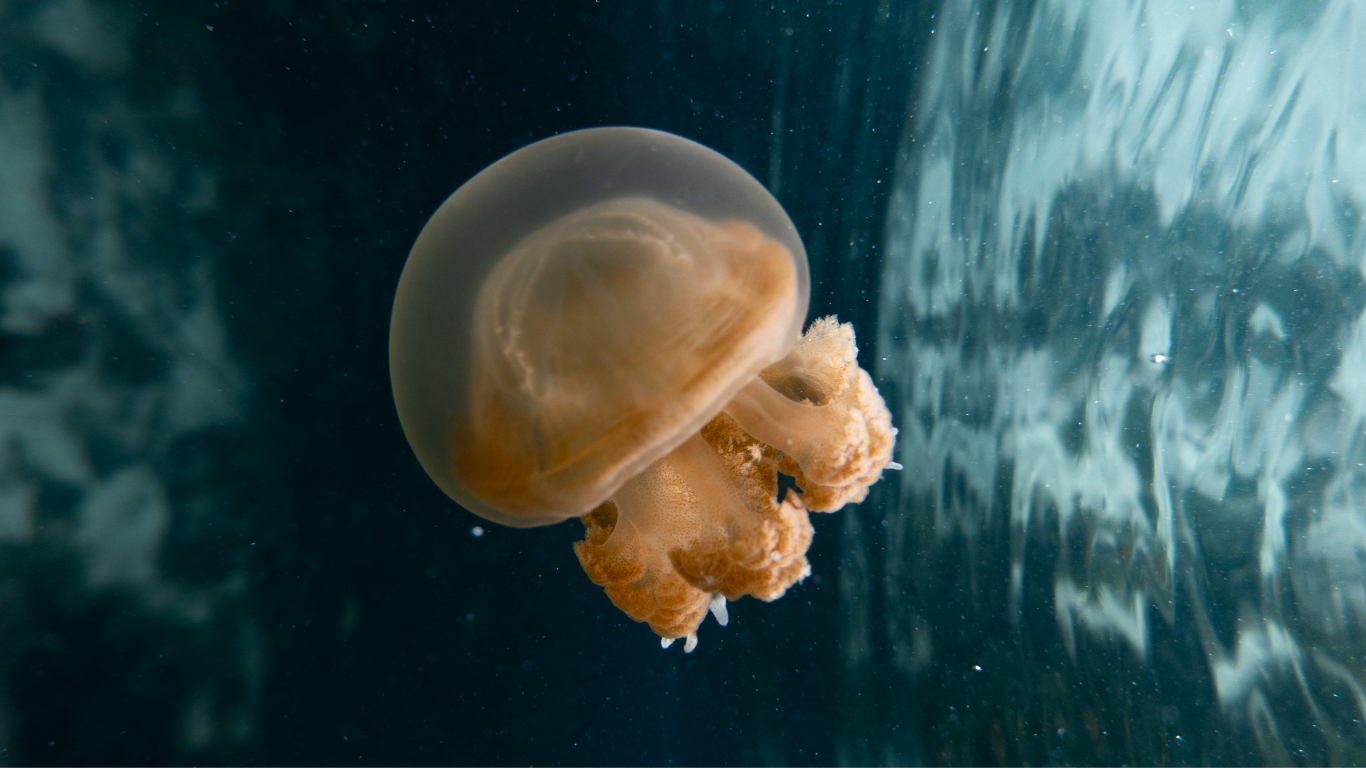
The jellyfish inside Kakaban Jellyfish Lake belong mostly to species of golden jellyfish and moon jellyfish. Normally, these animals use stinging cells to catch prey and defend themselves.
But inside the lake, things evolved differently.
Because there are almost no natural predators and very little competition for food, the jellyfish gradually lost the need for strong stinging cells. Over thousands of years, their stings became extremely weak.
For visitors swimming in the lake, this means the jellyfish feel harmless. Most people do not feel any sting at all.
This unusual evolutionary path is what makes Kakaban Jellyfish Lake so special.
Marine lakes like Kakaban are incredibly rare. Scientists estimate that there are only a handful of jellyfish lakes like this in the world.
The most famous examples are found in:
Each lake has its own species and unique ecological conditions.
Kakaban Jellyfish Lake is considered one of the largest and most accessible of these ecosystems, which makes it an important natural site for research and conservation.
Visitors can reach Kakaban Island by boat from the surrounding islands of the Derawan Archipelago. After arriving, a short wooden walkway leads up through the forest and down to the lake.
Stepping onto the viewing platform and seeing thousands of jellyfish drifting silently through the water is a moment many travelers remember for years.
Swimming among them is an experience unlike anything else in the ocean. Instead of avoiding jellyfish, you move gently among them as they pulse slowly through the water.
Because the ecosystem is extremely fragile, visitors are asked to follow simple rules to protect it. Touching the jellyfish, wearing sunscreen in the lake, or disturbing the animals is discouraged to keep the habitat healthy.
Many travelers exploring the Derawan Archipelago choose to include Kakaban in their itinerary.
The island is often visited as part of day trips that combine several iconic locations in the region.
Guests staying with Scuba Junkie Sangalaki regularly explore Kakaban alongside other nearby highlights such as manta cleaning stations, vibrant coral reefs, and turtle-rich dive sites.
Combining diving with unique natural experiences like Kakaban Jellyfish Lake gives visitors a deeper appreciation for the diversity of the Derawan Archipelago.
Kakaban Jellyfish Lake is more than a beautiful place. It is a reminder of how isolated ecosystems can evolve in surprising ways.
The jellyfish living here have adapted to their environment over thousands of years. Protecting this fragile ecosystem ensures that future generations will also have the chance to witness it.
When visiting places like Kakaban, responsible tourism plays an important role. Respectful swimming, careful movement in the water, and following local guidelines all help preserve the lake.
The idea of a lake in the middle of the ocean filled with jellyfish that do not sting sounds almost like a myth. Yet Kakaban Jellyfish Lake proves that nature still holds many surprises.
For travelers exploring the Derawan Archipelago, visiting this unique marine lake offers a chance to experience one of the rarest ecosystems on Earth.
And sometimes the most memorable moments of a trip happen not only underwater with dive gear, but floating quietly in a lake surrounded by thousands of gentle jellyfish.