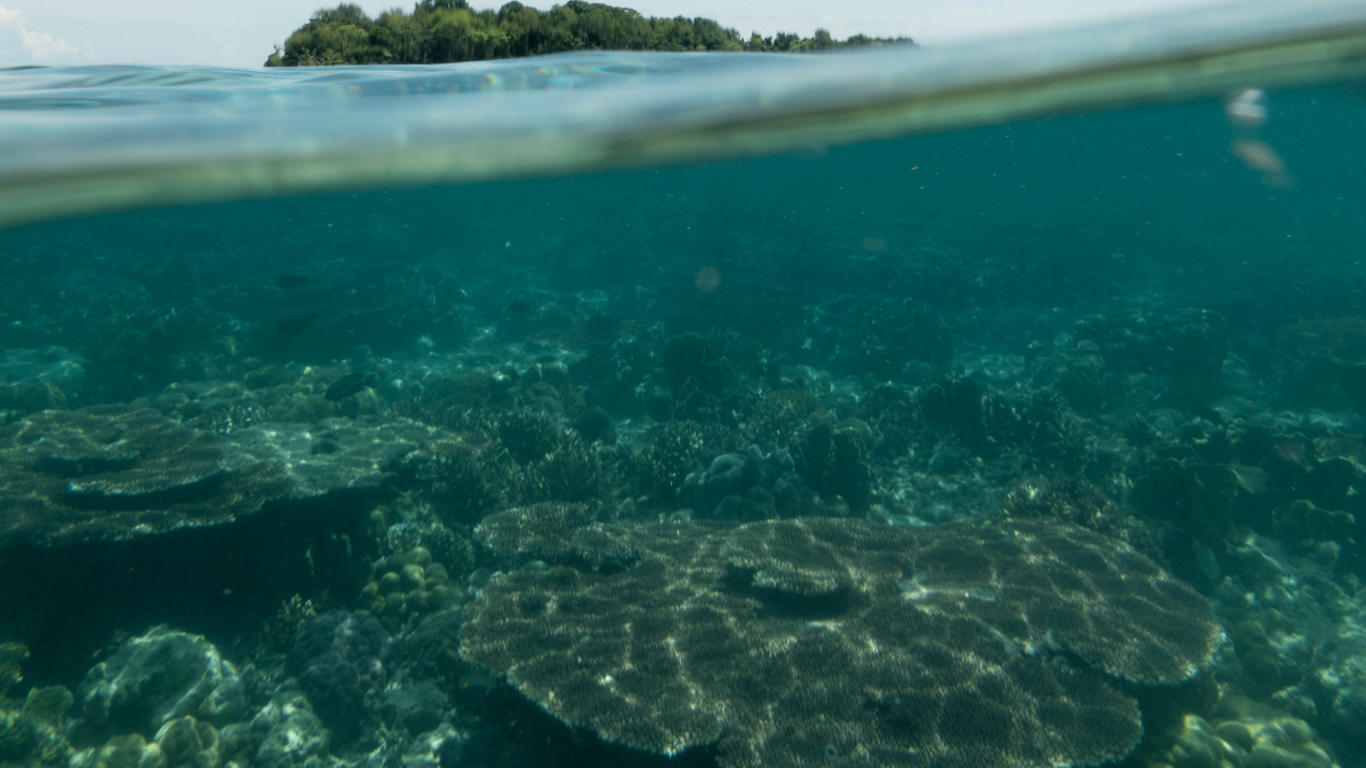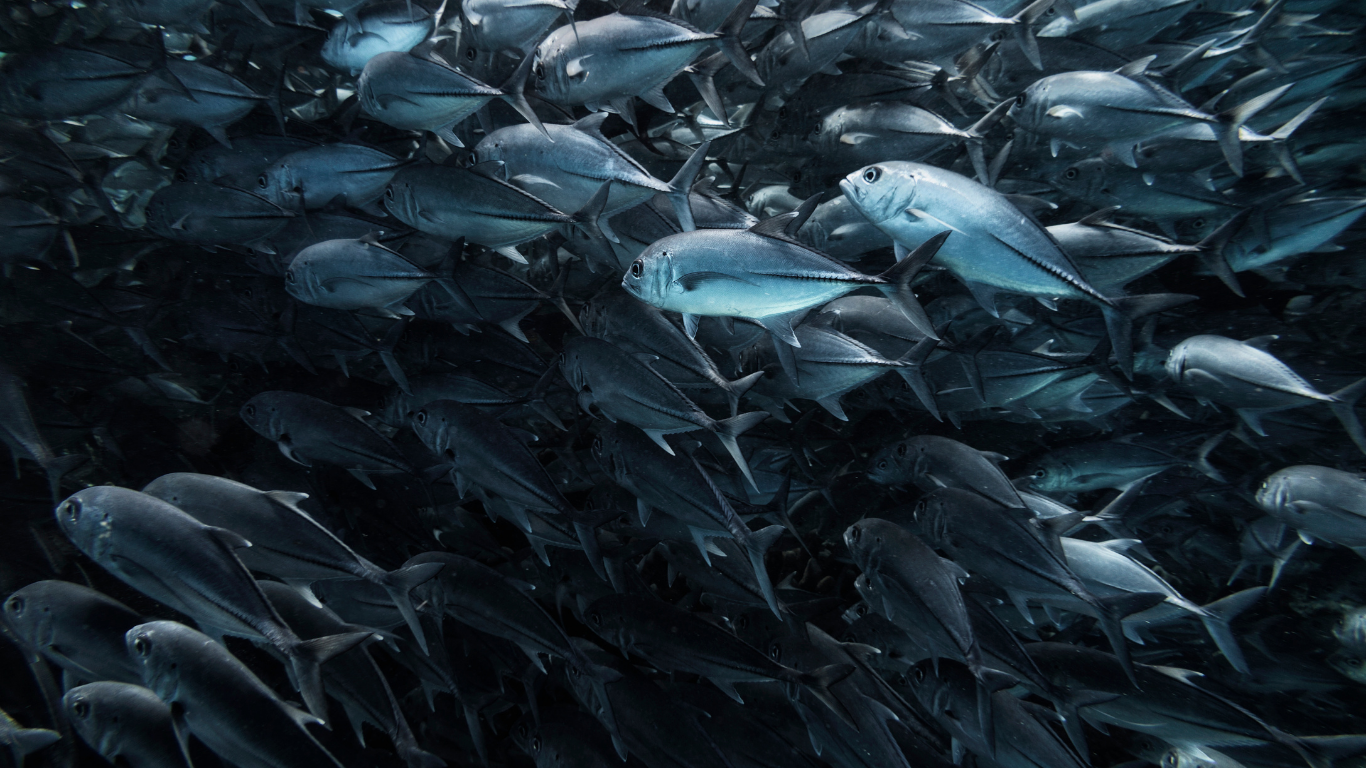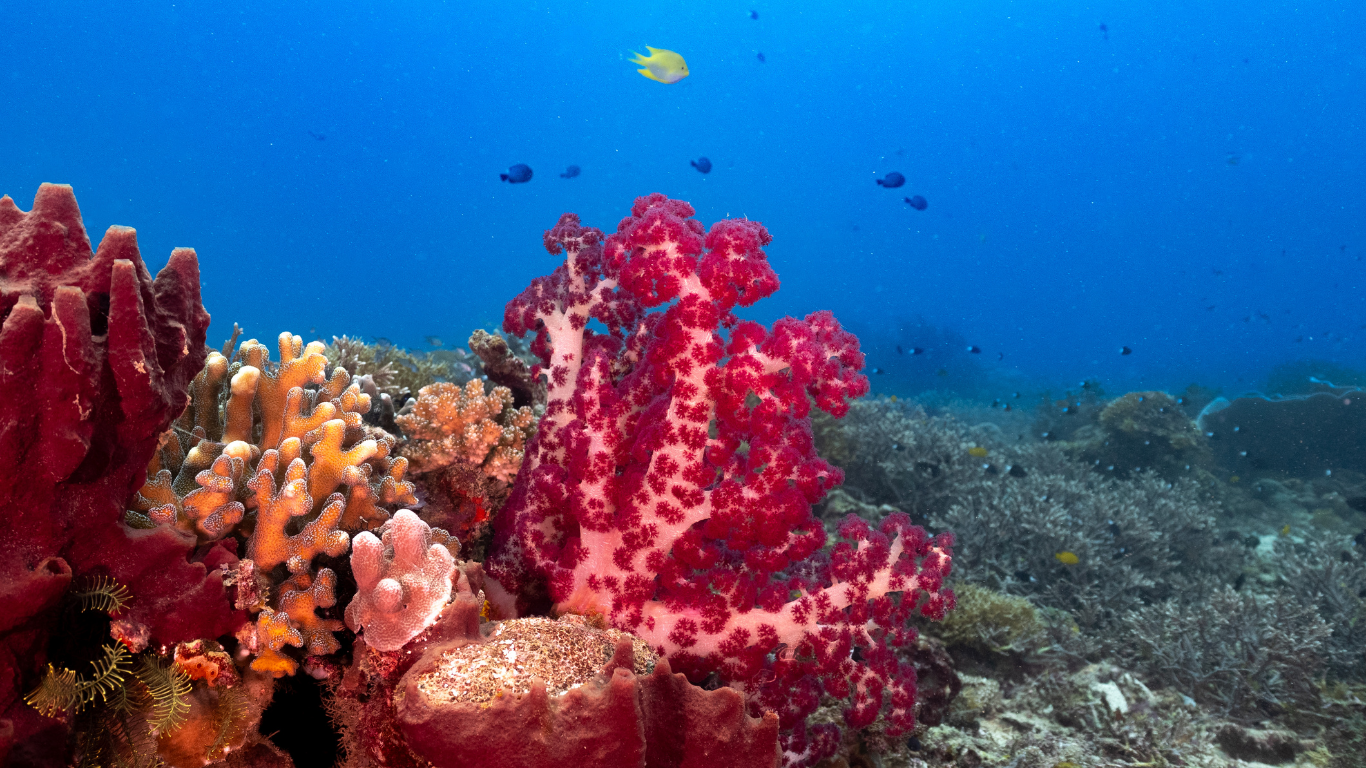
We provide daily dive trips and dive courses around the Sangalaki Marine Park.
Looking for tips and tricks about diving, marine life or what to do in Borneo? Follow us on our blog for weekly updates from the team!






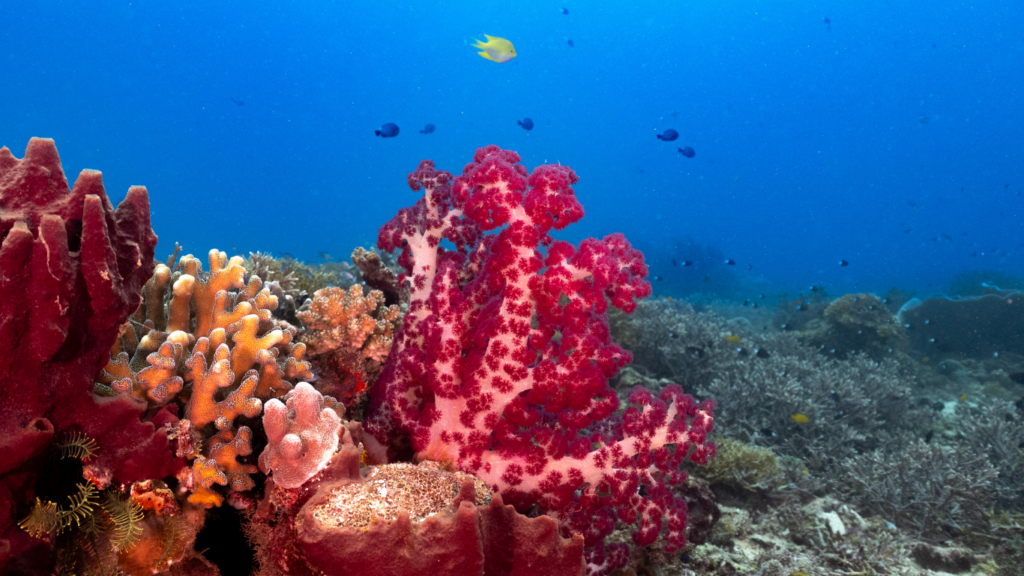
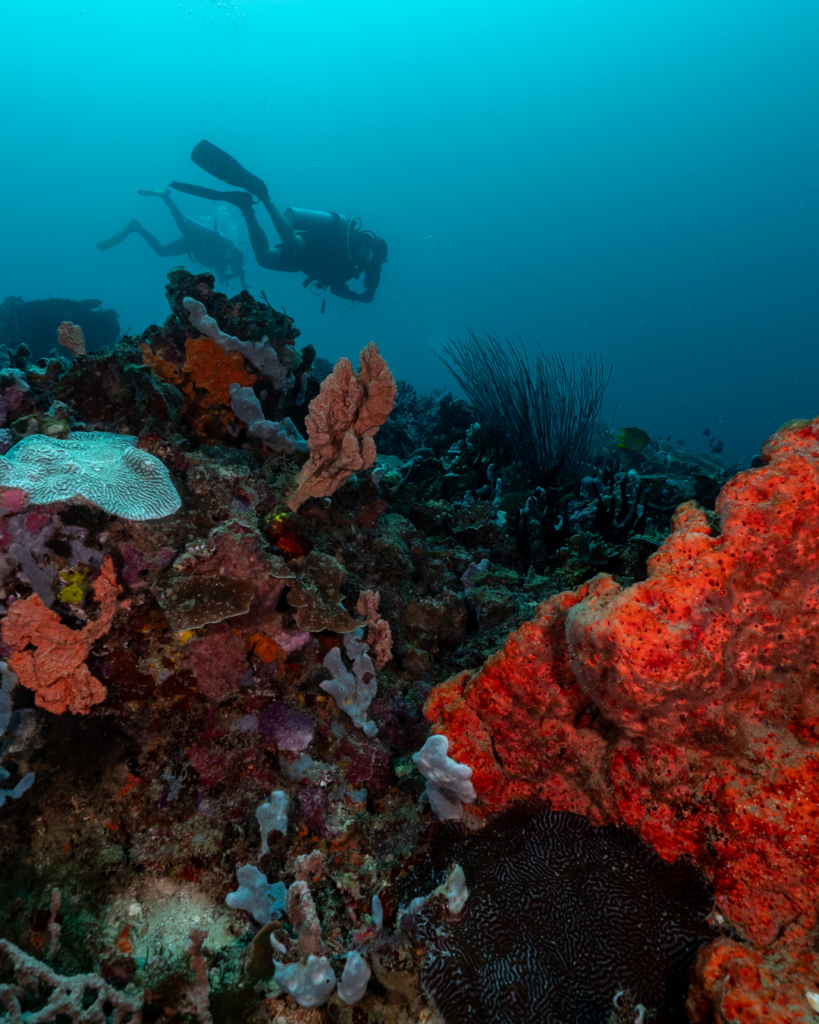
The first time you descend onto a healthy coral reef, it almost feels unreal.
Bright yellow butterflyfish weave through purple soft corals. Electric blue damselfish dart between orange sponges. Pink anemones sway gently while clownfish disappear into their tentacles. Everywhere you look, the reef seems to burst with colour.
It is easy to believe that nature simply enjoys painting the underwater world.
But nothing in the ocean happens by accident.
Every colour you see beneath the surface has a purpose. Some help animals hide, others help them communicate, and many are the result of extraordinary partnerships that have been evolving for millions of years.
Once you understand the story behind coral reef colours, you stop seeing the reef as a beautiful landscape.
You begin to see it as a living conversation.
One of the biggest surprises for many divers is discovering that corals are animals.
Although they often look like colourful rocks or underwater plants, corals are actually tiny animals called polyps. Thousands of these tiny creatures live together, building the reefs that support some of the richest ecosystems on Earth.
So where do all those colours come from?
Part of the answer lies in a remarkable partnership.
Inside the tissues of most reef-building corals live microscopic algae called zooxanthellae. These algae use sunlight to produce energy through photosynthesis, sharing much of that energy with the coral. In return, the coral provides the algae with shelter and the nutrients they need to survive.
It is one of nature’s most successful examples of symbiosis.
The algae also give many corals their golden, brown and green tones, while the corals themselves produce colourful pigments that help protect them from intense sunlight. Together, these two partners create the incredible palette we associate with tropical reefs.
If corals create the stage, reef fish are the performers.
Walk through a city and people communicate with words, expressions and gestures.
On a reef, colour is part of the language.
Some fish use bright colours to attract a mate. Others use bold patterns to warn rivals that a territory is already occupied. Juvenile fish often display different colours from adults, signalling that they are not yet competitors.
Camouflage is just as important.
A fish covered in spots, stripes or patches may look obvious to us, but against a reef full of corals, sponges and shadows, those patterns help it disappear surprisingly well.
Even predators rely on colour. A leopard shark resting on the sandy seabed blends so perfectly with its surroundings that divers can swim straight past without noticing it.
The reef is colourful because every animal has found its own way of surviving.
Have you ever noticed that underwater photos often look bluer than what you remember seeing?
Or perhaps you’ve looked at a bright red object while diving and wondered why it suddenly appeared brown or grey.
The answer has nothing to do with the coral or the fish.
Sunlight is made up of different colours, each with a different wavelength. As light travels through water, those colours are absorbed one by one.
Red is the first to disappear, often within the first few metres. Orange follows, then yellow. As you dive deeper, green begins to fade as well, leaving mostly blue light reaching greater depths.
That is why the ocean often looks blue from the surface.
It is also why underwater photographers use strobes or video lights. By adding white light back onto the reef, they reveal the true colours that are still there but hidden from our eyes.
The colours have never disappeared.
Only the light has.
A colourful reef is not automatically a healthy reef.
Some brightly coloured corals produce fluorescent pigments when they are under environmental stress. Others naturally display vivid colours even in perfect conditions.
However, healthy tropical reefs usually contain an incredible variety of colours because they support a diverse community of corals, fish, algae, sponges and countless other marine organisms.
Diversity creates colour.
And colour often reflects the complexity of the ecosystem.
This is one of the reasons the reefs of the Derawan Archipelago leave such a lasting impression on divers. From the coral gardens around Sangalaki to the walls of Maratua and the reefs surrounding Kakaban, every site offers a different combination of colours, textures and marine life.
No two dives ever look exactly the same.
Perhaps the most powerful reminder of the importance of coral reef colours is what happens when they disappear.
When water temperatures remain unusually high for extended periods, corals become stressed and may expel the microscopic algae living inside them.
Without these algae, the coral loses much of its colour, revealing the white limestone skeleton beneath. This process is known as coral bleaching.
A bleached coral is not necessarily dead.
If conditions improve quickly enough, the algae can return and the coral may recover.
But prolonged stress can make recovery difficult, affecting not only the coral itself but also the countless species that depend on healthy reefs for food and shelter.
This is why protecting coral reefs matters so much. Healthy reefs support marine biodiversity, protect coastlines and provide livelihoods for millions of people around the world.
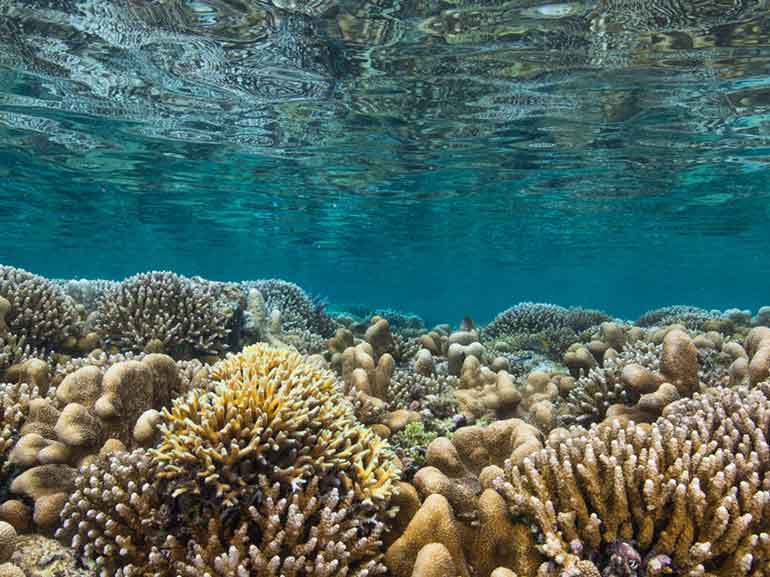
Many divers spend their first dives searching for turtles, sharks or manta rays.
There is nothing wrong with that.
But after a while, something changes.
You begin to notice the smaller details.
The tiny blue damselfish defending a patch of coral. The fluorescent edge of a giant clam. The way soft corals sway with the current. The unexpected splash of orange on a sponge tucked beneath a ledge.
Suddenly, the reef becomes more than a backdrop for big marine life.
It becomes the attraction itself.
And once that happens, every dive feels richer.
Coral reef colours come from a combination of coral pigments, microscopic algae living inside corals, colourful fish, sponges, algae and many other marine organisms.
Corals are animals. Individual coral polyps build the limestone structures that form coral reefs, while living in partnership with microscopic algae.
Fish use colour for communication, camouflage, attracting mates, defending territory and recognising members of their own species.
Water absorbs different colours of light at different depths. Red disappears first, followed by orange and yellow, leaving mostly blue light at greater depths.
Coral bleaching happens when stressed corals expel the algae living inside them, causing them to lose much of their colour. Bleached corals can recover if conditions improve.
Yes. The reefs around Sangalaki, Kakaban, Maratua and Derawan Island are known for their rich marine biodiversity and vibrant coral ecosystems, making the archipelago one of Indonesia’s most rewarding diving destinations.
The next time you descend onto a reef in the Derawan Archipelago, take a moment before searching for turtles or sharks.
Look at the colours around you.
The yellow butterflyfish disappearing into the coral. The purple soft corals dancing in the current. The giant clam glowing with electric blues and greens.
None of those colours are there by chance.
They are the result of millions of years of evolution, remarkable partnerships and countless strategies for survival.
Once you understand the story behind coral reef colours, you no longer see a beautiful reef.
You see an ecosystem speaking its own language.
And every dive becomes a little more fascinating than the last.